

What's Happening?
Egypt's President Abdel-Fattah el-Sissi has reiterated calls for structural changes in the United Nations Security Council to grant Africa a larger role in global decision-making. Speaking at a Russia-Africa partnership conference in Cairo, attended by
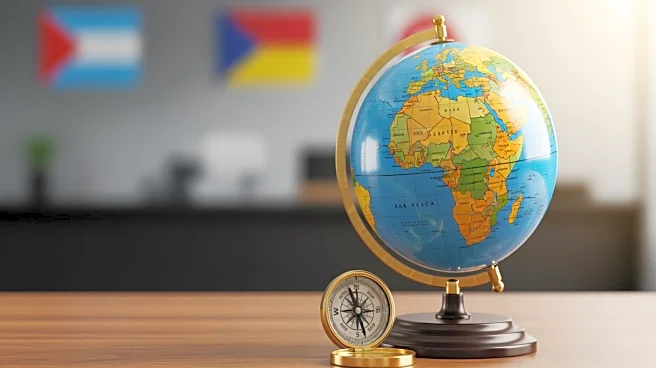
Russian Foreign Minister Sergey Lavrov and representatives from over 50 African countries, el-Sissi emphasized the need for a more pluralistic world order. He advocated for Africa to have at least two permanent seats with veto powers and five non-permanent seats on the Security Council. This demand aligns with the African Union's long-standing position since 2005, which argues that such reforms would contribute to peace and stability on the continent. Despite these calls, African nations have yet to agree on a mechanism for selecting their potential permanent representatives.
Why It's Important?
The push for reforming the UN Security Council to include African representation is significant as it addresses longstanding issues of global governance and equity. Africa, with its substantial human, economic, and political resources, seeks a more influential role in international affairs. The current structure of the Security Council, unchanged since 1945, reflects post-World War II power dynamics that many argue are outdated. Granting Africa a more significant role could lead to more balanced global policies and enhance the continent's ability to address its challenges, such as conflict resolution and economic development. This move could also shift international relations, as countries like Russia seek to strengthen ties with African nations amid geopolitical tensions.
What's Next?
The next steps involve continued coordination among African nations to reach a consensus on selecting representatives for potential permanent seats. Additionally, the Russia-Africa partnership plans to develop an action plan for cooperation from 2026 to 2029, which will be presented at the upcoming Russia-Africa summit. This summit could further solidify Africa's position in global politics and potentially influence the reform of international institutions. The outcome of these discussions may also impact the geopolitical landscape, as countries like Russia aim to expand their influence in Africa.