





What's Happening?
The Democratic Republic of Congo (DRC) has entered into a significant agreement with a US-Congolese consortium to develop up to 2 gigawatts of clean-energy infrastructure. This partnership, involving the National Agency for Electrification and Energy
Services in Rural and Peri-Urban Areas (ANSER) and the Grand DRC Electrification & Mining Development Consortium, aims to address the country's energy deficit, which has been a major barrier to industrialization and mineral processing. The initiative will focus on powering mining operations and expanding rural electrification, with a portion of the energy reserved for local communities and small enterprises. The agreement was signed during a ceremony linking Kinshasa and Washington, D.C., and is expected to mobilize international investment to strengthen the DRC's position in the global clean-energy and critical-minerals economy.
Why It's Important?
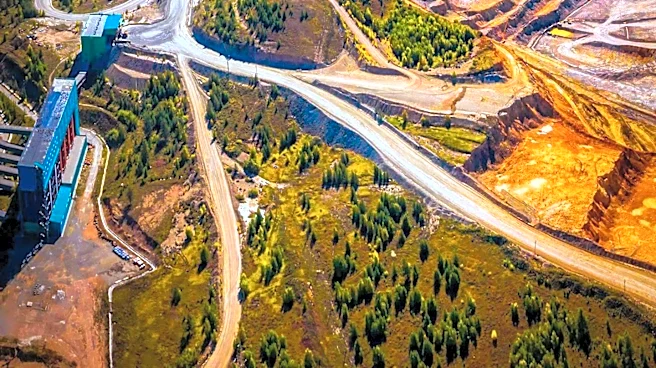
This initiative is crucial for the DRC, a country with vast mineral wealth, particularly in copper and cobalt, which are essential for electric vehicles and batteries. The energy deficit has hindered the DRC's ability to capitalize on its mineral resources fully. By providing reliable and lower-carbon electricity, the agreement aims to boost mining production and local processing, thus capturing more value domestically. The partnership also signifies deepening economic cooperation between the DRC and the United States, potentially attracting more international investment and fostering sustainable industrial development. The project could serve as a model for balancing industrial demand with social impact, ensuring that energy investments benefit both the mining industry and local communities.
What's Next?
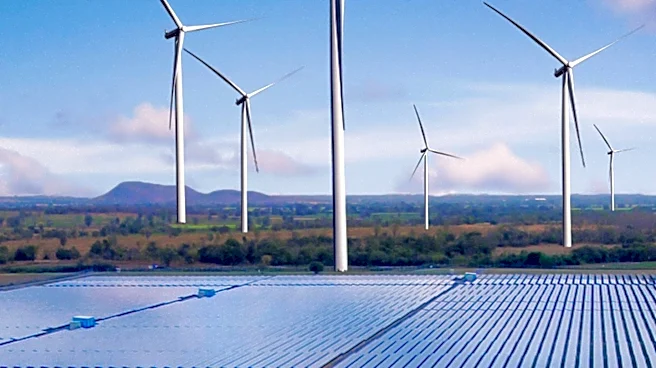
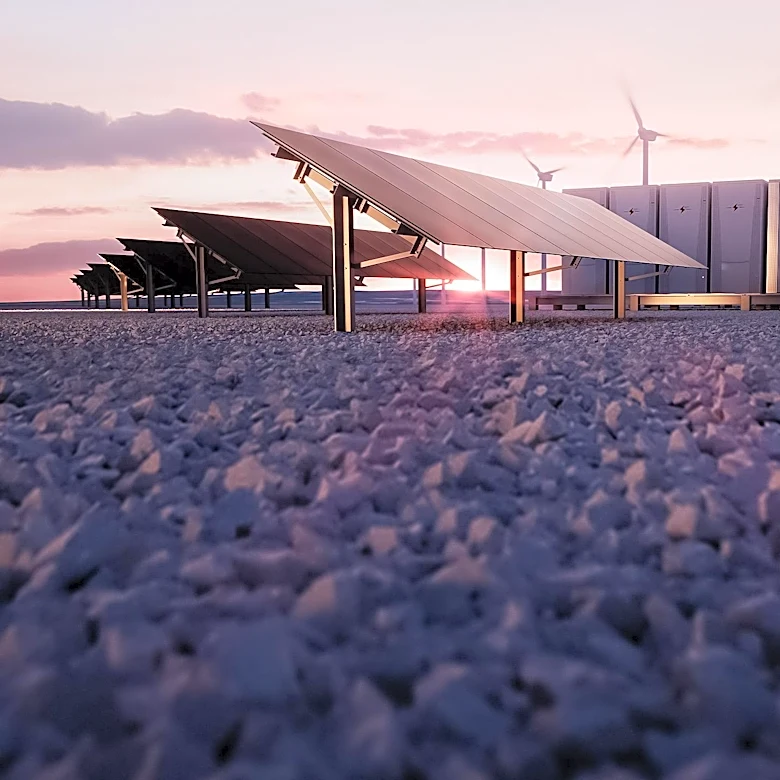
The next steps involve the development, financing, construction, and operation of the clean-energy infrastructure. The consortium plans to use a mix of solar photovoltaic plants, hybrid systems, and microgrids to meet the diverse energy needs across the DRC. Long-term power purchase agreements with mining companies are expected to provide financial stability for the projects. The initiative also includes technology and knowledge transfer to Congolese engineers, enhancing local expertise. Successful implementation could demonstrate how the DRC's mineral wealth can be leveraged for broader economic prosperity, potentially influencing future public-private partnerships in the region.