





What's Happening?
Voice-activated assistants and smart displays are increasingly being utilized to support individuals with dementia in their homes, enabling them to age in place longer. Devices such as the Amazon Echo Show 8 and Google Nest Hub Max offer voice control
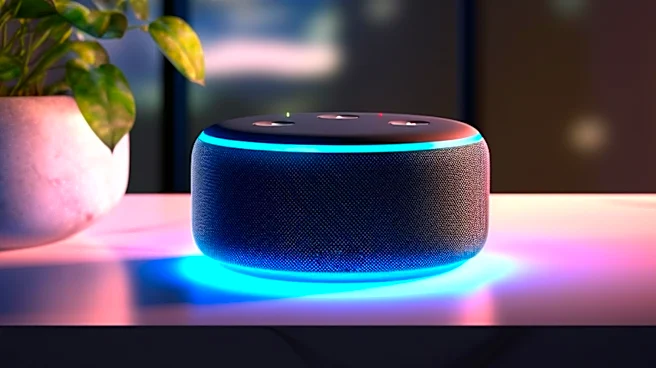
paired with visual displays, providing verbal and visual reminders for daily tasks. For instance, the Amazon Echo Show 8, priced at $149.99, combines a screen with voice commands, which is particularly beneficial for those with hearing loss as reminders are both seen and heard. The Google Nest Hub Max, at $229, further enhances this with a 10-inch display and a camera for video check-ins, though privacy concerns regarding the always-on camera suggest placement in living areas rather than bedrooms. For a more budget-friendly option, the Amazon Echo Dot ($49.99) provides voice reminders and smart plug control without a screen, which can be a limitation for individuals with hearing impairments. These devices are considered high-value purchases as they can replace phone calls that individuals with dementia might struggle to remember how to make.
Why It's Important?
The integration of voice-controlled smart devices into dementia care is significant for several reasons. It promotes the ability for seniors to 'age in place,' a goal for many families, by providing assistive technology that supports independence and daily functioning. These devices can reduce the burden on caregivers by automating reminders for medication, appointments, and other crucial tasks, thereby minimizing the risk of missed medications or other critical oversights. The visual component of smart displays is particularly vital for individuals with hearing loss, ensuring that important information is conveyed effectively. However, the use of devices with cameras, like the Google Nest Hub Max, introduces privacy considerations that families and caregivers must carefully navigate to balance monitoring with maintaining dignity and personal space. The accessibility and ease of use of voice control can empower individuals with cognitive impairments, allowing them to interact with technology more intuitively than traditional interfaces.
What's Next?
As technology continues to advance, the development of smart home devices for dementia care is expected to focus on enhanced ease of use, improved privacy features, and greater integration with existing smart home ecosystems. Future iterations may include more sophisticated AI to personalize assistance further, adapting to individual routines and cognitive levels. Caregivers will likely see more options for remote management and real-time alerts, allowing for proactive intervention. There will also be an ongoing emphasis on balancing the benefits of monitoring with the need to preserve the dignity and independence of individuals with dementia. The market may also see an increase in devices that offer more robust solutions for fall prevention, medication management, and environmental controls, all designed to be as unobtrusive as possible while providing critical support.
Beyond the Headlines
Beyond the immediate practical benefits, the widespread adoption of voice-controlled devices in dementia care raises deeper ethical and societal questions. The balance between safety and autonomy becomes a central theme, as continuous monitoring, even for well-intentioned reasons, can infringe on an individual's sense of privacy and independence. There's a need for careful consideration of data security and how personal information, including health data, collected by these devices is stored and used. Furthermore, the digital divide could exacerbate inequalities, as access to these technologies might be limited for lower-income families, potentially creating disparities in care. The long-term psychological impact of relying on AI for daily tasks on individuals with cognitive decline also warrants further research, ensuring that technology enhances human connection rather than replacing it.