



What's Happening?
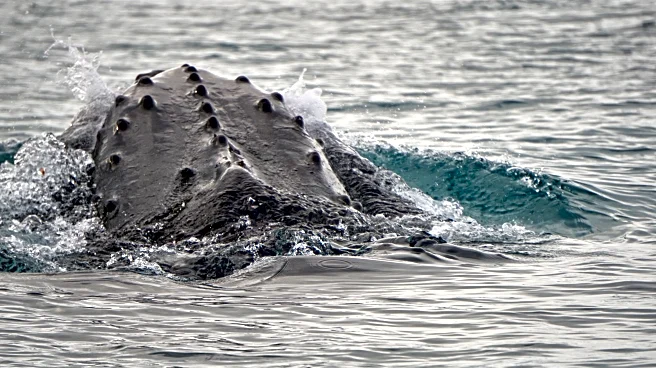
Researchers at the Woods Hole Oceanographic Institution in Massachusetts have uncovered a whale song recording from 1949, believed to be the oldest known recording of its kind. The song, captured in Bermuda, features a humpback whale and was recorded
using a Gray Audograph, a dictation machine from the 1940s. This discovery was made while digitizing old audio recordings. The recording not only captures the whale's song but also provides a snapshot of the ocean's soundscape from the late 1940s, which was significantly quieter than today. This historical context is crucial for understanding how human-made noises, such as increased shipping, affect whale communication. The recording predates the well-known discovery of whale songs by scientist Roger Payne by nearly two decades.
Why It's Important?
The discovery of this recording is significant as it provides a rare glimpse into the past acoustic environment of the ocean, offering a baseline to compare with today's noisier seas. Understanding the historical soundscape can help scientists assess the impact of modern human activities on marine life, particularly whales, which rely heavily on sound for communication, navigation, and survival. The recording also highlights the importance of preserving historical data, as it can yield new insights into environmental changes over time. This could influence future conservation strategies and policies aimed at protecting vulnerable whale populations from threats like ship strikes and noise pollution.
What's Next?
The findings from this recording could lead to further research into historical ocean soundscapes and their changes over time. Scientists may use this data to develop more effective conservation measures to mitigate the impact of human activities on marine life. Additionally, the recording could inspire public interest and support for ocean conservation efforts, as it provides a tangible connection to the past and highlights the ongoing challenges faced by marine species. Researchers may also explore other archived recordings for additional insights into historical marine environments.
Beyond the Headlines
This discovery underscores the broader implications of how historical data can inform current environmental challenges. It raises questions about the long-term effects of human activity on marine ecosystems and the importance of maintaining biodiversity. The recording also serves as a reminder of the technological advancements in acoustic research and the potential for future innovations to further our understanding of marine life. Ethically, it highlights the responsibility of current generations to preserve and protect the natural world for future generations.