
What's Happening?
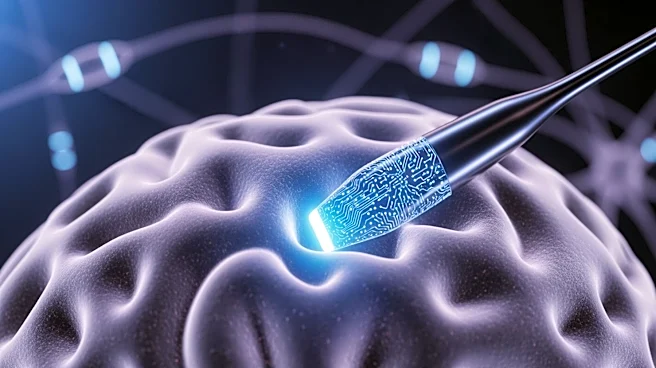
A recent study has investigated the association between cortical large-scale networks and subthalamic nucleus (STN) activity in patients with Parkinson's disease. The research involved 27 patients who
had undergone deep brain stimulation (DBS) electrode implantation in the STN. The study aimed to understand how different brain networks interact with the STN, particularly during various states of medication. Using magnetoencephalography (MEG) recordings, the researchers analyzed the brain activity of these patients both on and off dopaminergic medication. The study found significant patterns of STN-cortical coherence, which varied depending on the medication state and the specific brain networks activated. This research provides insights into the dynamic brain network interactions in Parkinson's disease, potentially informing future therapeutic strategies.
Why It's Important?
Understanding the interaction between brain networks and the STN in Parkinson's disease is crucial for developing more effective treatments. The findings of this study could lead to improved DBS techniques by targeting specific brain networks to alleviate symptoms more effectively. This research also highlights the importance of personalized medicine, as the variability in network activity suggests that treatment could be tailored to individual patients' brain activity patterns. Moreover, the study's methodology, which combines MEG and DBS, offers a novel approach to studying brain disorders, potentially applicable to other neurological conditions.
What's Next?
Future research may focus on refining DBS techniques based on these findings, potentially leading to more targeted and effective treatments for Parkinson's disease. Additionally, further studies could explore the application of this research methodology to other neurological disorders, expanding the understanding of brain network interactions. Clinical trials may be designed to test the efficacy of personalized DBS settings, informed by individual brain network activity patterns, in improving patient outcomes.
Beyond the Headlines
This study underscores the complexity of brain network interactions in neurological disorders and the potential for advanced neuroimaging techniques to unravel these complexities. The ethical implications of personalized brain treatments, such as DBS, also warrant consideration, particularly regarding patient consent and the long-term effects of such interventions. As research progresses, the integration of neuroimaging data into clinical practice could transform the landscape of neurological treatment, emphasizing the need for interdisciplinary collaboration between neuroscientists, clinicians, and ethicists.