





What's Happening?
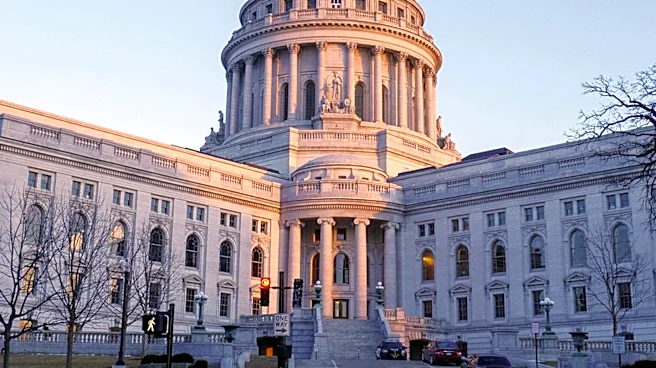
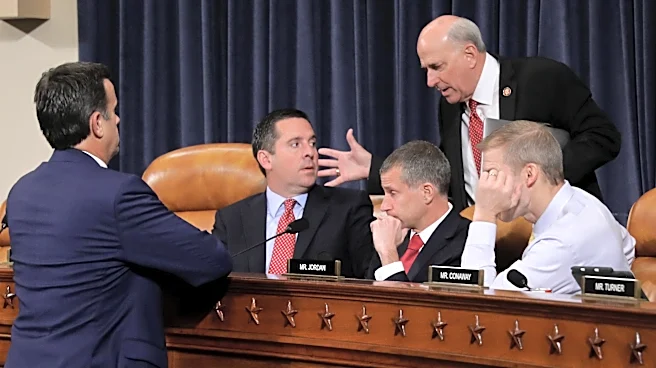
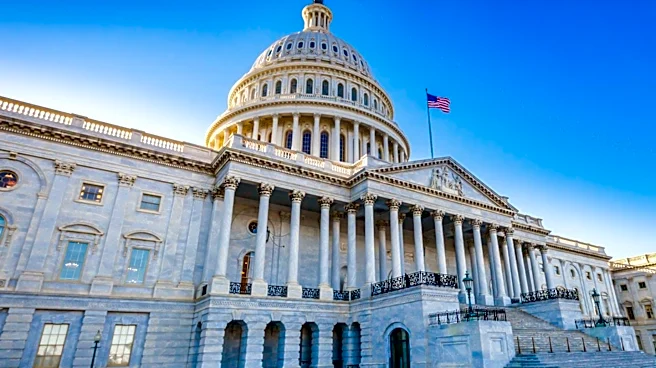
The U.S. House of Representatives is experiencing a legislative standstill due to internal conflicts within the Republican Party. Speaker Mike Johnson has sent House members home early for the July 4 recess after failing to advance key legislative agendas.
The GOP is struggling to open the floor for serious legislative business, primarily due to infighting with conservative hardliners. Johnson's plan to incorporate the SAVE America Act into a budget reconciliation package, which includes $67 billion for the Pentagon, faces significant hurdles. The proposal includes a controversial $4 billion incentive for states enforcing voter ID laws, which may not pass Senate scrutiny. Additionally, hardline Republicans are demanding substantial cuts to social programs, complicating negotiations with moderates and Democrats. The legislative calendar is tight, with only 18 working days left before the midterm elections, adding pressure to resolve these issues.
Why It's Important?
The legislative impasse highlights the challenges within the Republican Party as it attempts to balance the demands of its conservative base with broader legislative goals. The inability to pass key bills, such as the defense authorization bill, could weaken the GOP's negotiating position with the Senate. The situation also underscores the political risks for Republicans, as further cuts to social programs could alienate moderate voters and impact the party's performance in the upcoming midterm elections. The outcome of these legislative battles will have significant implications for U.S. defense spending, voter ID laws, and social program funding, affecting a wide range of stakeholders from military personnel to low-income families.
What's Next?
In the coming weeks, GOP leadership will need to navigate internal divisions and find a path forward to pass critical legislation. The focus will be on resolving the floor crisis and advancing the SAVE America Act. Additionally, President Trump's decision on the bipartisan housing deregulation bill, which he has criticized, remains pending. The bill will automatically become law if not signed by July 10. The outcome of these legislative efforts will shape the political landscape leading up to the midterm elections, influencing voter perceptions and party dynamics.