




What's Happening?
The Gilded Age, spanning roughly from 1870 to 1900, was a period in U.S. history characterized by rapid industrial growth, expanding cities, and intense political conflict. While the era saw significant prosperity, it was also marked by profound inequality
and corruption. Key developments included the expansion of railroads and corporations, which transformed work, city life, and political power. This era followed Reconstruction and laid the groundwork for the Progressive Era. In 1877, federal troops withdrew from the South, effectively ending Reconstruction and leading to the consolidation of white southern Democratic political control. This withdrawal resulted in increased segregation, racial violence, and barriers to voting for Black Americans in the decades that followed. The Gilded Age also saw the rise of powerful entrepreneurs like Andrew Carnegie in steel and John D. Rockefeller in oil, whose large corporations raised questions about competition and concentrated economic power.
Why It's Important?
The Gilded Age is crucial for understanding the foundations of modern American society, economy, and politics. The rapid industrialization and urbanization of this period created immense wealth but also exacerbated social inequalities, leading to significant labor unrest and calls for reform. The concentration of wealth and political influence among a few 'robber barons' or 'captains of industry' sparked debates about economic justice and corporate power that continue to resonate today. The end of Reconstruction in 1877, a pivotal event within this era, had long-lasting consequences for civil rights, particularly for Black Americans, shaping the trajectory of racial relations and political power in the South for generations. The challenges faced by workers, farmers, and reformers during this time, including unsafe conditions, economic hardship, and corruption, highlight the ongoing struggle for social and economic equity in the U.S.
What's Next?
The Gilded Age's developments directly set the stage for the Progressive Era, which followed. The issues of political corruption, dangerous working conditions, and the unchecked power of large corporations that emerged during the Gilded Age became central concerns for Progressive reformers. Future historical studies and analyses will continue to explore how the Gilded Age's economic and social structures influenced subsequent movements for change, including the fight for civil rights, labor protections, and government regulation. Understanding this period is essential for comprehending the evolution of American democracy, the role of government in regulating industry, and the persistent challenges of addressing wealth disparity and social justice. The transition to the Progressive Era, though gradual, represented a societal response to the problems highlighted by the Gilded Age.
Beyond the Headlines
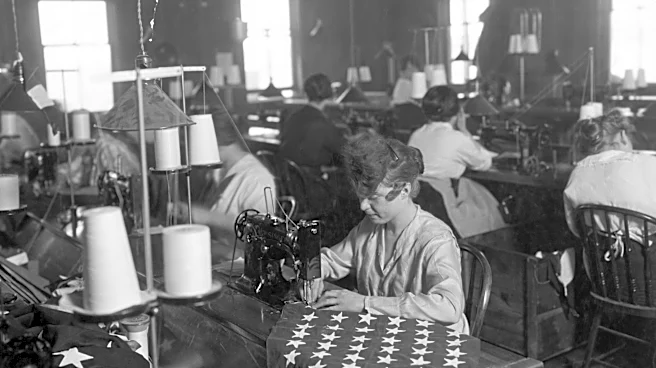
Beyond the immediate economic and political shifts, the Gilded Age also brought about significant cultural and demographic changes. Industrial jobs attracted large numbers of immigrants from Europe and migrants from rural areas to cities, leading to rapid urban growth. While cities offered new opportunities, they also faced strains on housing, water, and sanitation, with many working-class families living in crowded tenements. This period also saw the expansion of the American West, driven by railroads and industrial growth, which came at a devastating cost to American Indian nations through federal policy, settlement, and military force. The Gilded Age's political landscape was marked by intense party competition, patronage, and debates over tariffs and the money supply, reflecting a broader concern that ordinary citizens had too little influence compared to powerful business interests. These underlying tensions and transformations continue to inform discussions about American identity, social mobility, and the balance of power between individuals, corporations, and the government.