
What's Happening?
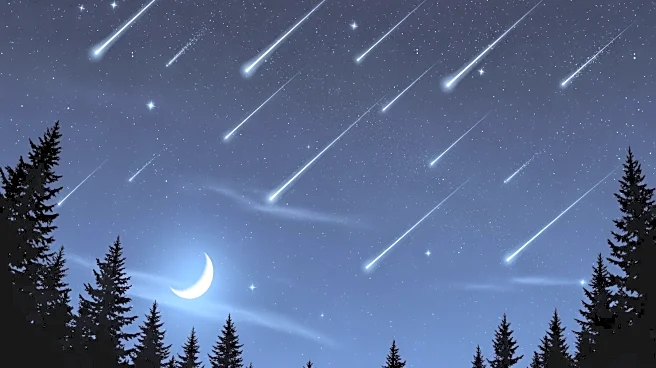
The Perseids meteor shower is set to peak on August 12, 2026, providing a stunning celestial event for stargazers. This annual meteor shower is renowned for its high rate of meteors, with expectations
of around 120 meteors per hour at its peak. The Perseids are visible in both the northern and southern hemispheres, making it a widely accessible event for observers around the world. The shower is caused by Earth passing through the debris left by the comet Swift-Tuttle, resulting in bright streaks of light as the particles burn up in the atmosphere. This event is part of a series of notable astronomical occurrences in 2026, including other meteor showers and eclipses.
Why It's Important?
The Perseids meteor shower is one of the most anticipated astronomical events of the year, drawing interest from both amateur and professional astronomers. Its high visibility and frequency make it an ideal opportunity for educational outreach and public engagement in astronomy. The event also highlights the importance of preserving dark skies, as light pollution can significantly diminish the visibility of such natural phenomena. For the scientific community, meteor showers like the Perseids offer valuable data on the composition and behavior of cometary debris, contributing to our understanding of the solar system's history and dynamics.
What's Next?
As the date of the Perseids peak approaches, astronomy clubs and observatories across the U.S. are likely to organize viewing events and educational programs to maximize public participation. These events provide an opportunity for community engagement and can inspire interest in science and astronomy among attendees. Additionally, researchers may use this period to conduct studies on meteor activity and atmospheric interactions. The event also serves as a reminder of the ongoing need to address light pollution to ensure future generations can enjoy such celestial displays.
Beyond the Headlines
The Perseids meteor shower underscores the cultural and scientific significance of celestial events. Historically, meteor showers have been interpreted in various ways by different cultures, often seen as omens or messages from the divine. In modern times, they serve as a reminder of humanity's place in the universe and the interconnectedness of celestial bodies. The event also highlights the importance of international collaboration in astronomy, as observations from different parts of the world contribute to a comprehensive understanding of these phenomena.