



What's Happening?
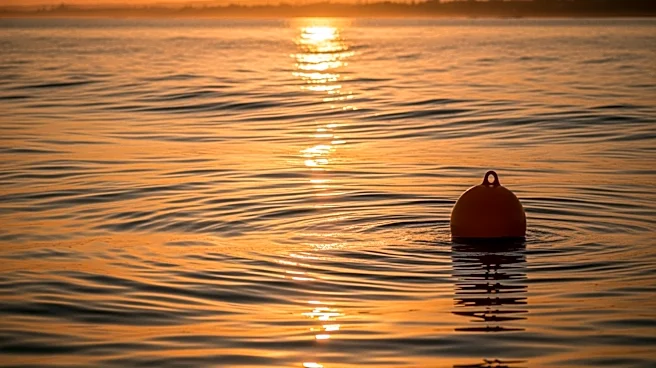
Southern California is experiencing record high ocean temperatures, raising concerns about a prolonged marine heatwave. According to the Scripps Institution of Oceanography, several shoreline stations have reported temperatures significantly above historical
averages. This marine heatwave, which began last fall, is not attributed to the usual El Niño currents but rather to a high-pressure atmospheric system that has warmed both air and sea. This phenomenon has drawn comparisons to 'the Blob,' a previous marine heatwave that severely impacted marine life. The current situation poses a threat to marine ecosystems, as prolonged ocean heat can devastate phytoplankton and cause harmful algal blooms, affecting various marine species. Scientists are closely monitoring the situation to determine if the heatwave will dissipate or evolve into a more severe event.
Why It's Important?
The rising ocean temperatures off Southern California have significant implications for marine ecosystems and the broader environment. Prolonged heatwaves can disrupt the marine food chain, starting with phytoplankton, which are crucial for supporting marine life. The potential for harmful algal blooms could impact species such as sea lions, dolphins, and various fish, leading to ecological imbalances. Additionally, the economic impact on fisheries, particularly those reliant on species like the Dungeness crab, could be substantial. The situation underscores the broader challenges posed by climate change, as such heatwaves become more frequent and intense. Understanding the drivers behind these temperature anomalies is critical for developing strategies to mitigate their effects and protect marine biodiversity.
What's Next?
Scientists are monitoring the situation to see if the current marine heatwave will subside or intensify. The coming weeks are crucial, as atmospheric conditions typically shift in spring, potentially allowing cooler waters to rise to the surface through a process called upwelling. This could alleviate some of the heat stress on marine ecosystems. However, if the high-pressure system persists, it could lead to more severe impacts in the fall and winter, especially if followed by a strong El Niño. Researchers are focused on understanding the atmospheric changes contributing to these extreme temperatures to better predict and manage future events.
Beyond the Headlines
The ongoing marine heatwave highlights the complex interplay between atmospheric conditions and ocean temperatures. The persistence of high-pressure systems can create feedback loops that reinforce warm conditions, potentially altering the natural upwelling processes critical for nutrient cycling in marine ecosystems. This could have long-term consequences for the health and sustainability of marine life along the West Coast. While warmer waters may offer short-term benefits, such as easier fishing for certain species, the overall ecological costs are significant. The situation serves as a reminder of the urgent need for adaptive strategies to address the impacts of climate change on marine environments.