
What's Happening?
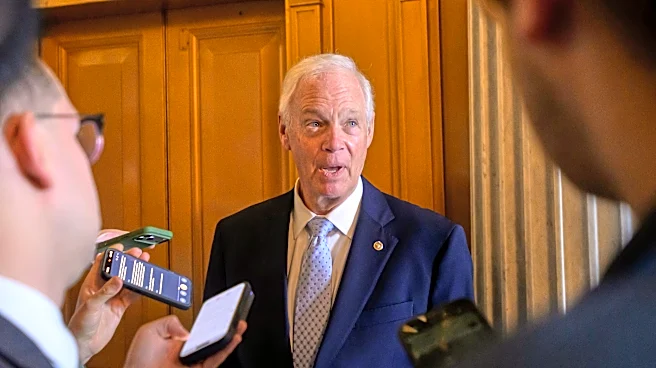
Mitch McConnell, the long-serving Republican senator from Kentucky, is stepping down from his leadership role as he concludes his final Senate term. Known for his strategic political maneuvers, McConnell has
been a significant figure in shaping the Republican Party's direction, particularly through his use of the filibuster and his role in securing a conservative majority on the Supreme Court. His decisions, such as holding open a Supreme Court seat in 2016 and pushing through nominations in 2020, have had lasting impacts on U.S. governance. McConnell's absence from public life due to health issues has sparked speculation about his influence and legacy.
Why It's Important?
McConnell's legacy is pivotal in understanding the current and future dynamics of U.S. politics. His strategic use of Senate rules has set precedents that may challenge future legislative processes, particularly regarding judicial appointments. The polarization and procedural gridlock he championed could hinder effective governance, especially if Democrats regain control of the Senate. McConnell's career highlights the tension between political strategy and governance, raising questions about the long-term effects of prioritizing party over policy. His influence on the judiciary will shape American law and society for decades, affecting issues from reproductive rights to campaign finance.
What's Next?
As McConnell steps back, the Republican Party faces a leadership transition that could redefine its strategies and policies. The party's alignment with President Trump and the potential for further polarization will be critical in upcoming elections. McConnell's departure may also prompt a reevaluation of Senate rules and procedures, particularly the filibuster, as Democrats consider reforms to address legislative gridlock. The future of the Supreme Court and lower federal courts will remain a contentious issue, with both parties likely to strategize around potential vacancies and the ideological balance of the judiciary.