




What's Happening?
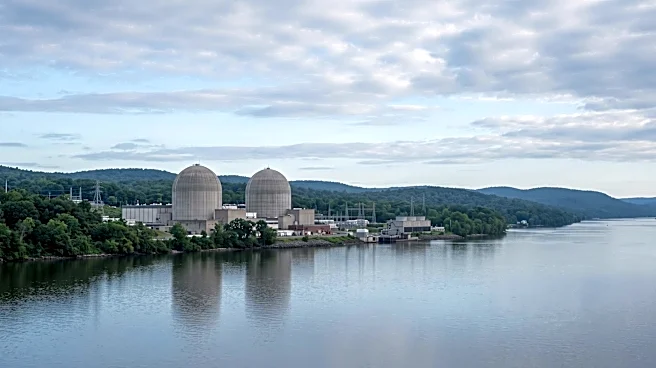
The future of the Indian Point Energy Center in New York's 17th Congressional District is a contentious issue, with incumbent Republican Mike Lawler advocating for its reopening and Democratic challenger Cait Conley opposing it. The plant, which ceased
operations in 2021 due to unsustainable operating costs and litigation, is currently undergoing decommissioning by Holtec International. The Trump administration has expressed a strong pro-nuclear stance, aiming to significantly expand U.S. nuclear generating capacity and encouraging the reactivation of prematurely shuttered facilities. This federal push has fueled speculation about Indian Point's potential restart, despite local opposition and existing agreements requiring unanimous consent from five parties, including New York State, which has stated its opposition. The decommissioning process itself has faced scrutiny regarding transparency and the management of a $2.3 billion trust fund, with concerns raised about Holtec's financial qualifications and the potential for the site to become a Superfund site if funds are depleted before cleanup is complete. The debate also involves the discharge of treated radioactive wastewater into the Hudson River, a move permitted by a federal judge despite a New York state law prohibiting it.
Why It's Important?
The situation at Indian Point highlights a broader national debate on energy policy, grid reliability, and environmental concerns. The Trump administration's aggressive push for nuclear power aims to enhance U.S. energy security and competitiveness, particularly against countries like China, by expanding nuclear capacity and reactivating closed plants. This strategy could lead to significant investments in the nuclear industry and potentially lower utility costs, aligning with Lawler's 'all-of-the-above' energy approach. However, the local opposition at Indian Point underscores the significant environmental and public health concerns associated with nuclear facilities, including radioactive waste leaks, potential seismic risks, and the long-term challenges of decommissioning. The dispute also reflects a growing tension between federal energy policy and state-level environmental regulations, potentially turning nuclear power into a states' rights issue. The financial transparency of decommissioning funds and the oversight mechanisms for such projects are critical, as mismanagement could leave communities with significant environmental liabilities and taxpayers bearing the cleanup costs.
What's Next?
The immediate future of Indian Point will likely be influenced by the ongoing congressional race in New York's 17th District, where the plant's fate is a key campaign issue. Should Lawler's efforts to reopen the plant gain traction, it would face significant legal challenges from local activists and New York State, who have vowed to take legal action. The appeal against the federal judge's decision to allow Holtec to discharge treated radioactive wastewater into the Hudson River is also pending, with its outcome potentially impacted by the Trump administration's weakening of federal Clean Water Act protections. Furthermore, the transparency and oversight of Holtec's decommissioning process will remain under scrutiny, particularly regarding the management of the trust fund and the company's long-term plans for the site. The broader federal pro-nuclear policies, including expedited review processes for advanced reactors, suggest a continued national emphasis on nuclear energy, which could lead to similar debates and conflicts in other regions with shuttered or aging nuclear facilities.
Beyond the Headlines
Beyond the immediate political and environmental battles, the Indian Point situation reveals deeper implications for the balance of power between federal and state governments on critical infrastructure and environmental policy. The federal government's push for nuclear energy, driven by national security and economic competitiveness, often clashes with local communities' concerns about safety, environmental impact, and self-determination. This conflict highlights the ethical dilemma of prioritizing national energy goals over localized risks and community well-being. The case also brings to light the long-term financial and environmental responsibilities associated with nuclear power, particularly the challenges of decommissioning and waste management, which can extend for decades and involve substantial costs. The lack of transparency in managing decommissioning funds and the limited oversight mechanisms raise questions about corporate accountability and the protection of public interest in such complex, high-stakes projects. Ultimately, the Indian Point saga serves as a microcosm of the broader societal challenge of balancing energy demands with environmental stewardship and community rights in a rapidly changing world.