
What's Happening?
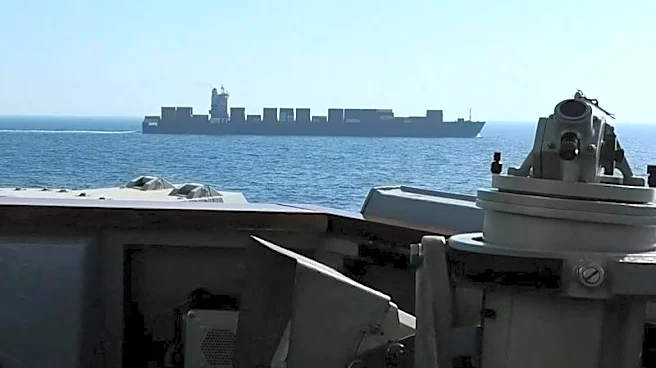
The U.S. naval blockade, initiated on April 13, 2026, has reportedly cost Iran approximately $4.8 billion in oil revenue, according to a Pentagon estimate. This blockade is part of a broader strategy to pressure
Iran amid stalled nuclear negotiations. The blockade aims to cut off Iran's oil exports, a significant source of revenue for the country. Acting Pentagon press secretary Joel Valdez stated that the blockade is intended to weaken Iran's ability to fund terrorism. The financial impact of the blockade is part of a larger geopolitical strategy involving the U.S. and its allies, as they seek to curb Iran's influence in the region.
Why It's Important?
The financial losses incurred by Iran due to the blockade highlight the economic leverage the U.S. holds in its foreign policy strategy. By targeting Iran's oil revenue, the U.S. aims to exert pressure on the Iranian government to return to the negotiating table for nuclear talks. This move also underscores the broader geopolitical tensions in the Middle East, where control over oil resources and trade routes is a critical factor. The blockade's impact on global oil markets could lead to fluctuations in oil prices, affecting economies worldwide. Additionally, the U.S. strategy may influence other countries' diplomatic relations with Iran.
What's Next?
As the blockade continues, Iran may seek alternative methods to circumvent the restrictions, potentially involving diplomatic or economic alliances with other nations. The U.S. will likely maintain its pressure tactics while monitoring Iran's responses. The international community, particularly countries reliant on Middle Eastern oil, will be closely watching the situation. Future developments could include renewed diplomatic efforts to resolve the nuclear standoff or further economic sanctions. The outcome of these actions will have significant implications for regional stability and global energy markets.