




What's Happening?
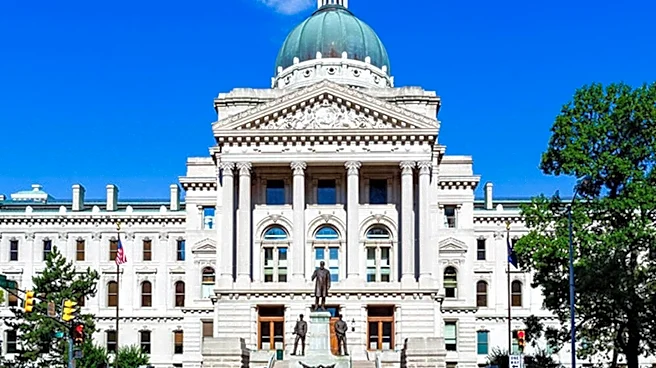
The Indiana Supreme Court has heard oral arguments in a case involving Duke Energy Indiana that could significantly alter the legal precedent for associational standing in the state. The case originated from Duke Energy's proposal to build two natural
gas-fired units at its Cayuga Generating Station, a $3.3 billion project that the Indiana Utility Regulatory Commission (IURC) approved with a pay-as-you-build financing mechanism. The Citizens Action Coalition and Vote Solar appealed the IURC's decision, arguing that this financing would force customers to pay higher prices before the units generate electricity. Duke Energy subsequently challenged the organizations' standing to sue, contending that neither organization is a direct Duke customer and no individual customers were listed as plaintiffs. The Supreme Court took the case on an emergency basis, despite some judicial concerns about the expedited process, due to its potential constitutional implications for how groups can represent their members in legal disputes.
Why It's Important?
This case is critically important because it could redefine who has the right to sue in Indiana, particularly for advocacy groups representing broader public interests. If the Supreme Court rules against associational standing, it could significantly limit the ability of organizations—ranging from environmental groups and consumer advocates to gun rights and retiree associations—to challenge decisions made by corporations or government bodies on behalf of their members. This would place a greater burden on individual citizens to initiate lawsuits, which can be cost-prohibitive and logistically challenging. The outcome could empower large corporations by reducing the avenues for organized public opposition to their projects or policies. Conversely, upholding associational standing would maintain a crucial mechanism for collective action and access to justice for groups whose individual members might lack the resources or visibility to pursue legal action independently. The decision will have far-reaching implications for public advocacy and corporate accountability in Indiana.
What's Next?
The Indiana Supreme Court will now deliberate on the arguments presented by Duke Energy and the Citizens Action Coalition/Vote Solar. The court may issue a ruling that either upholds, modifies, or overturns the existing understanding of associational standing in Indiana. A potential 'middle ground' solution, discussed during arguments, could involve requiring associations to list an affected individual as a 'nominal' plaintiff while the association maintains control of the lawsuit. The decision will likely lead to significant adjustments in how advocacy groups operate and strategize their legal challenges in Indiana. Depending on the ruling, there could be a surge in individual lawsuits or a chilling effect on public interest litigation. Stakeholders across various sectors, including business, environmental, and civil liberties groups, will be closely watching the court's decision for its impact on their ability to engage in legal advocacy.
Beyond the Headlines
Beyond the immediate legal implications for Duke Energy and the involved advocacy groups, this case touches upon fundamental questions of democratic participation and access to justice. The concept of associational standing is vital for ensuring that diverse voices and collective interests can be heard in the legal system, especially when individual harms are diffuse or when individuals fear retaliation. A restrictive ruling could disproportionately affect marginalized communities or those with limited resources, making it harder for them to challenge powerful entities. Conversely, an overly broad interpretation could lead to concerns about frivolous litigation. The court's decision will reflect its view on the balance between protecting corporate interests and facilitating public oversight, potentially influencing the landscape of public policy and corporate behavior in Indiana for years to come. It also highlights the ongoing tension between economic development projects and environmental/consumer protection concerns.