
What's Happening?
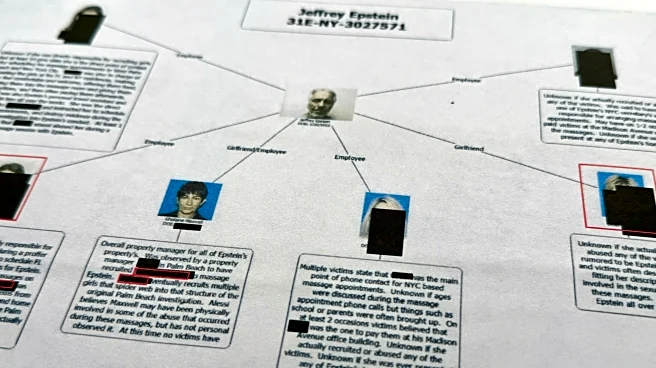
Former President Bill Clinton has publicly called for a public hearing as part of the House Oversight Committee's investigation into convicted sex offender Jeffrey Epstein. In a series of social media
posts, Clinton criticized the current arrangement, which involves closed-door depositions, as serving partisan interests rather than justice for Epstein's victims or transparency for the public. Both Bill and Hillary Clinton have agreed to provide depositions later this month after the GOP-led committee threatened them with contempt of Congress for non-compliance with subpoenas. The subpoenas specifically requested depositions, not public hearings. Despite this, Clinton argues that a public hearing would better serve the interests of fairness and transparency. The committee's chairman, Rep. James Comer, has stated that the depositions will be recorded and made public, and the Clintons are welcome to testify in a public hearing afterward if they choose.
Why It's Important?
The call for a public hearing by Bill Clinton highlights the ongoing political tensions surrounding the Epstein investigation. The Clintons' involvement, despite no allegations of wrongdoing against them, underscores the political nature of the probe. This situation reflects broader issues of transparency and accountability in high-profile investigations, where public perception and political maneuvering can overshadow the pursuit of justice. The outcome of this probe could influence public trust in congressional investigations and the perceived impartiality of political processes. Additionally, the involvement of prominent figures like the Clintons draws significant media attention, potentially impacting public opinion and the political landscape.
What's Next?
The Clintons are scheduled to provide their depositions on February 26 and 27, respectively. Following these closed-door sessions, the committee plans to release the video and transcripts to the public. If the Clintons still wish to testify publicly, they may do so. The decision on whether to hold a public hearing ultimately rests with Rep. James Comer. The developments in this case will likely continue to attract media scrutiny and public interest, potentially influencing future congressional procedures and the handling of politically sensitive investigations.