







What's Happening?
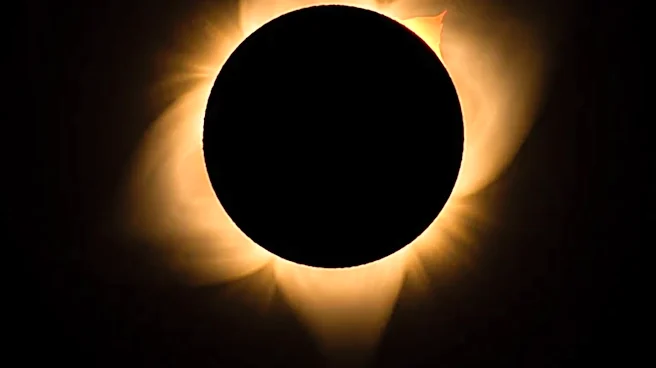
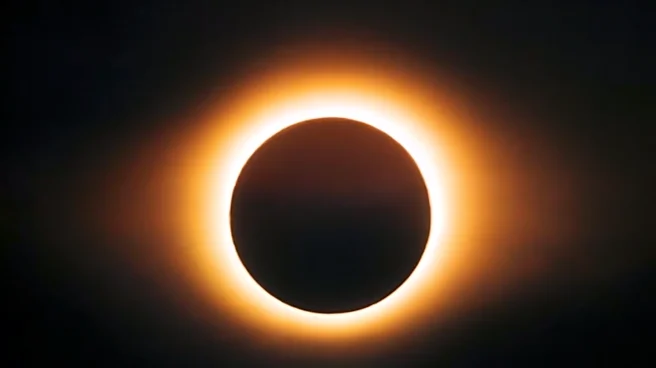
On August 12, 2026, Iceland will experience a total solar eclipse, with the longest duration of totality occurring in the remote Westfjords region. The eclipse will begin between 5:43 and 5:50 p.m. GMT, depending on the location, and will last up to 2 minutes
and 13 seconds at Látrabjarg. The event is part of a larger celestial phenomenon that includes the Perseid meteor shower and the visibility of Venus, although the latter may not be visible after sunset in Iceland. The eclipse will be visible across a narrow path that includes parts of Greenland and northern Spain, turning day into night for those in the path of totality.
Why It's Important?
This solar eclipse is significant as it offers a rare opportunity for skywatchers and scientists to observe and study the sun's corona, which is only visible during totality. The event is expected to attract tourists and eclipse chasers to Iceland, potentially boosting local tourism and economy. Additionally, the eclipse coincides with the Perseid meteor shower, providing a unique astronomical experience. The event also highlights the importance of scientific research and public interest in celestial phenomena, fostering a greater appreciation for astronomy and natural sciences.
What's Next?
Following the eclipse, scientists and enthusiasts will likely analyze data collected during the event to gain insights into solar activity and its effects on Earth's atmosphere. Local authorities in Iceland may prepare for an influx of tourists, ensuring safety and accessibility to prime viewing locations. The event may also inspire educational initiatives and public outreach programs to engage communities in astronomy and science. As the eclipse approaches, weather forecasts will be closely monitored to ensure optimal viewing conditions.
Beyond the Headlines
The eclipse presents an opportunity to explore the cultural and historical significance of solar eclipses in Iceland and other regions. Historically, eclipses have been viewed with awe and sometimes fear, influencing myths and legends. In modern times, they serve as a reminder of the interconnectedness of celestial bodies and the importance of scientific inquiry. The event may also prompt discussions on environmental conservation, as clear skies and minimal light pollution are crucial for observing such phenomena.