






What's Happening?
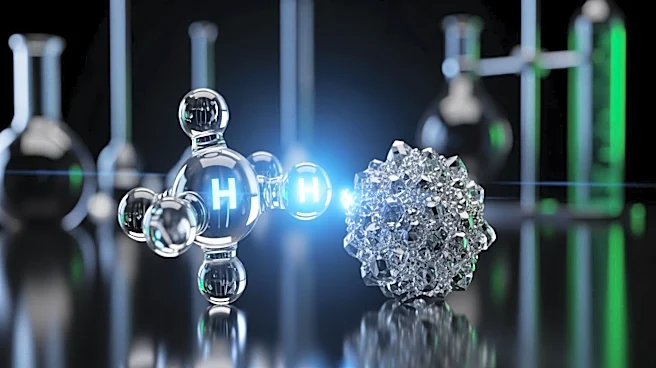
Researchers at Lawrence Livermore National Laboratory (LLNL) have successfully observed the initial stages of hydrogen-uranium corrosion, a significant breakthrough in understanding material degradation in nuclear technology. The study, published in npj
Materials Degradation, utilized white-light interferometry to capture the formation of uranium hydride blisters on uranium surfaces. This reaction, which occurs when hydrogen gas interacts with uranium metal, results in the creation of a chemically reactive powder that can compromise the safety and longevity of nuclear fuels and hydrogen storage systems. The research aims to develop predictive models for uranium component degradation, crucial for the design of durable fusion reactors and nuclear fuels.
Why It's Important?
This research is pivotal for the nuclear industry, as it addresses the safety and efficiency of nuclear materials. Understanding the hydrogen-uranium interaction is essential for developing more reliable nuclear fuels and storage solutions, which are critical for the future of clean energy. The ability to predict and mitigate material degradation can lead to safer and more sustainable nuclear technologies, potentially reducing the risks associated with nuclear energy production. This advancement could also influence regulatory standards and safety protocols, benefiting both the industry and public safety.
What's Next?
The next phase of research will involve extending the study across a broader range of conditions, including different temperatures and hydrogen pressures. This will help in developing comprehensive models that can predict the behavior of uranium under various operational scenarios. Additionally, the techniques used in this study could be applied to other metals, potentially impacting the fields of hydride superconductors and corrosion prevention.
Beyond the Headlines
The study highlights the importance of institutional knowledge and collaboration in scientific research. The insights gained from experienced scientists at LLNL were crucial in achieving this breakthrough, demonstrating the value of preserving and utilizing institutional memory in advancing scientific understanding.