




What's Happening?
The Council on American-Islamic Relations (CAIR) has issued a warning regarding Indiana Lieutenant Governor Micah Beckwith's escalating anti-Muslim rhetoric, stating that his comments incite hatred and endanger American Muslims. CAIR highlighted several
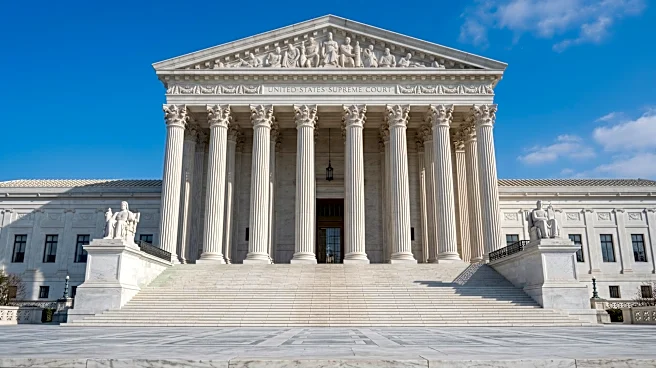
instances, including remarks made around the anniversary of 9/11, where Beckwith allegedly encouraged hostility towards the Muslim community. The organization condemned his false claims that the United States is a 'Christian nation' and that the U.S. Supreme Court has ruled Christianity takes precedence over other religions. CAIR also referenced Beckwith's previous descriptions of the Islamic call to prayer as 'words of death and destruction' and his assertion that people need 'permission to hate again.' In response, CAIR has called on public officials across the political spectrum to reject such rhetoric and uphold constitutional guarantees of religious liberty for all Americans.
Why It's Important?
This situation is significant because it directly addresses the impact of political rhetoric on minority communities and the broader principles of religious freedom in the United States. When elected officials engage in speech perceived as discriminatory or hateful, it can foster an environment where prejudice and violence against specific groups are normalized. CAIR's warning underscores the potential for such rhetoric to translate into real-world harm, putting American Muslims at risk. Furthermore, the Lieutenant Governor's statements challenge the constitutional separation of church and state and the guarantee of religious liberty for all citizens, regardless of faith. This controversy highlights the ongoing struggle to maintain an inclusive and tolerant society, where public figures are expected to uphold the rights and dignity of all constituents. It also emphasizes the role of civil rights organizations in advocating for vulnerable communities and holding leaders accountable.
What's Next?
Following CAIR's warning, the immediate future may see continued pressure on Lieutenant Governor Beckwith to retract or clarify his statements, and on Governor Mike Braun to more explicitly repudiate the anti-Islam remarks. Civil rights organizations and interfaith groups may intensify their advocacy efforts, potentially organizing public demonstrations, educational campaigns, or interfaith dialogues to counter the rhetoric and promote understanding. There could also be increased scrutiny from national media and political commentators regarding the implications of such speech from a high-ranking state official. Depending on the political climate, this issue could become a point of contention in future elections, with voters evaluating candidates based on their stance on religious freedom and inclusivity. Legal challenges or formal complaints to ethics committees are also potential avenues if the rhetoric is perceived to cross certain boundaries.
Beyond the Headlines
Beyond the immediate political fallout, this incident reflects deeper societal tensions regarding religious pluralism and national identity in the United States. The assertion that the U.S. is a 'Christian nation' challenges the foundational principles of a secular government and religious diversity. Such rhetoric can exacerbate divisions within society, undermining efforts to build a cohesive national identity that embraces all faiths and backgrounds. It also raises questions about the responsibility of public officials to foster unity rather than division. The ongoing debate over religious freedom versus religious supremacy has profound implications for civil rights, public policy, and the social fabric of the nation. This situation serves as a reminder of the constant need to defend constitutional protections for all minority groups and to actively combat hate speech in all its forms, ensuring that the principles of equality and respect are upheld in public discourse.