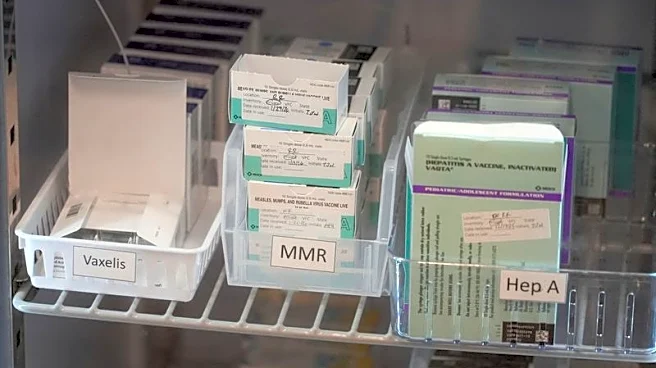





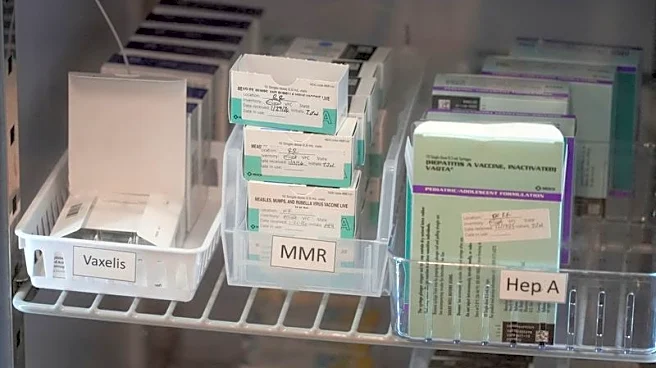


What's Happening?
Researchers at Georgia State University have developed an oral antiviral drug candidate, GHP-88310, that shows promise in blocking the transmission of a measles-like virus in ferrets. The study, published in Nature Microbiology, demonstrates that the drug can prevent
both direct contact and airborne transmission of the virus. This development is significant as measles has reemerged in the United States, with thousands of cases reported since 2025. The drug could potentially augment traditional vaccination efforts, offering a new tool in controlling outbreaks.
Why It's Important?
The emergence of measles in the U.S. and other parts of North America poses a significant public health challenge. The development of GHP-88310 offers a potential breakthrough in managing and preventing outbreaks, which could reduce the burden on healthcare systems and prevent further spread. If successful in human trials, this drug could complement existing vaccination strategies, providing a dual approach to controlling measles. The research underscores the importance of continued investment in antiviral drug development to address infectious diseases.
What's Next?
The next step for the researchers is to prepare GHP-88310 for formal clinical testing in humans. Successful trials could lead to the drug's approval and integration into public health strategies for managing measles outbreaks. The study's findings may also encourage further research into antiviral drugs for other infectious diseases, potentially leading to broader applications. Public health officials and policymakers will be watching the progress of this drug closely, as it could influence future outbreak management strategies.