


What's Happening?
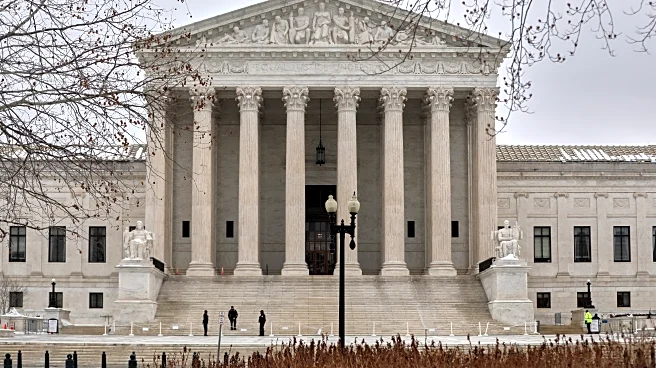
The U.S. Supreme Court has ruled in a 6-3 decision that President Trump's 'Liberation Day' tariffs, imposed under the International Emergency Economic Powers Act (IEEPA), are unconstitutional. These tariffs were initially justified by Trump as a response
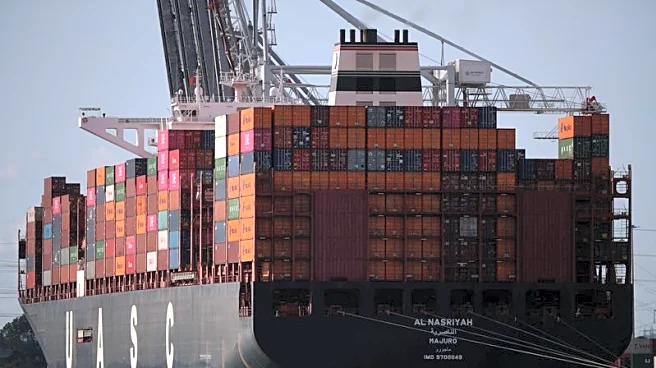
to national emergencies related to illegal drug influxes and trade deficits. However, the court found that the tariffs, which are essentially taxes, should be under the purview of Congress, not the executive branch. Despite this ruling, President Trump announced a new 10% global tariff, effective for 150 days, under a different legal provision. This move has introduced further uncertainty into global trade dynamics.
Why It's Important?
The Supreme Court's decision is significant as it curtails the executive branch's power to unilaterally impose tariffs, reinforcing the constitutional role of Congress in taxation. This ruling impacts U.S. businesses and consumers who have borne the cost of these tariffs, which were intended to boost domestic manufacturing but instead slowed economic growth. The decision also highlights the ongoing tension between the executive and legislative branches over trade policy. Trump's new tariff announcement, despite the ruling, suggests continued volatility in U.S. trade relations, potentially affecting international markets and domestic economic stability.
What's Next?
Following the Supreme Court's decision, there may be legislative and legal challenges to President Trump's new tariff strategy. Congress could seek to assert its authority over trade policy, potentially leading to new legislation or oversight measures. Additionally, businesses affected by the tariffs may pursue legal action to recover costs. The international community will likely monitor these developments closely, as they could influence global trade agreements and economic partnerships. The administration's response to the ruling and its impact on future trade policies will be critical in shaping U.S. economic strategy.
Beyond the Headlines
The ruling underscores broader concerns about the balance of power within the U.S. government and the potential for executive overreach. It raises questions about the use of emergency powers and the need for checks and balances in a democratic system. The decision may prompt discussions on reforming the legal framework governing emergency powers to prevent similar situations in the future. Additionally, the economic implications of the tariffs, such as increased costs for consumers and businesses, highlight the complex interplay between domestic policy and global economic trends.