



What's Happening?
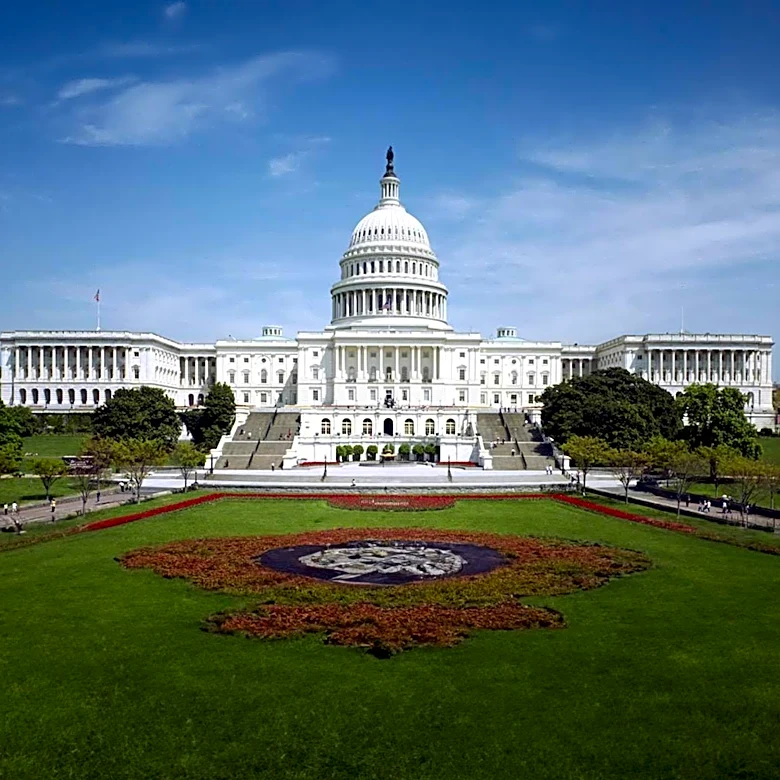
In December 1998, the U.S. House of Representatives impeached President Bill Clinton on charges of perjury and obstruction of justice. These charges stemmed from investigations into his relationship with Monica Lewinsky, a White House intern. The controversy
became a significant national political story in the late 1990s. Following the House's decision, the impeachment proceedings moved to the Senate. The Senate trial commenced in January 1999, and on February 12, the Senate voted on the articles of impeachment. The first article received 45 guilty votes and 55 not-guilty votes, while the second received 50 guilty votes and 50 not-guilty votes. Neither article reached the two-thirds majority required for conviction, resulting in President Clinton's acquittal. Consequently, he remained in office and completed his second term.
Why It's Important?
The impeachment of President Clinton marked a pivotal moment in American political history, highlighting the constitutional process of impeachment and its application to a sitting president. This event underscored the intense political conflicts of the era and raised significant questions about presidential power, personal conduct, and the role of investigations in high office. The acquittal by the Senate demonstrated the high bar for removing a president from office, requiring broad bipartisan consensus that ultimately did not materialize. The scandal also brought into sharp focus the intersection of private behavior and public office, influencing public discourse on morality and leadership. For the Democratic Party, it represented a period of significant challenge, while for the Republican Party, it was an attempt to hold the executive accountable, albeit one that did not result in removal from office.
What's Next?
While the immediate crisis of impeachment concluded with President Clinton's acquittal, the long-term implications of the Monica Lewinsky scandal continued to shape his post-presidency and the political landscape. The episode became a case study in presidential conduct and the limits of political accountability, influencing subsequent discussions about executive ethics and the use of impeachment as a political tool. For future administrations, the event served as a cautionary tale regarding personal conduct and the scrutiny faced by public figures. The scandal also contributed to a more polarized media environment, as news coverage and public opinion were deeply divided along partisan lines, a trend that has persisted in American politics.
Beyond the Headlines
The Monica Lewinsky scandal and President Clinton's impeachment had profound cultural and legal ramifications beyond the immediate political fallout. Ethically, it sparked widespread debate about privacy, consent, and the power dynamics inherent in relationships within professional settings, particularly in the workplace. Legally, it tested the boundaries of executive privilege and the scope of independent investigations, setting precedents for how future presidential misconduct allegations might be handled. Culturally, the intense media scrutiny and public discussion surrounding Lewinsky's role brought issues of gender, public shaming, and the treatment of women in the public eye to the forefront. The event also contributed to a broader shift in how personal lives of public figures are perceived and scrutinized, blurring the lines between private and public spheres in an increasingly interconnected world.