







What's Happening?
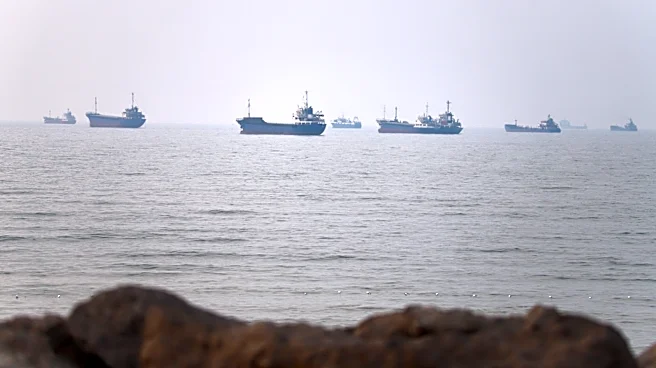
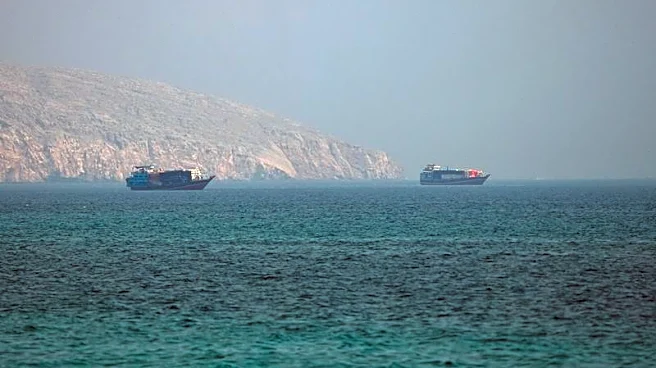
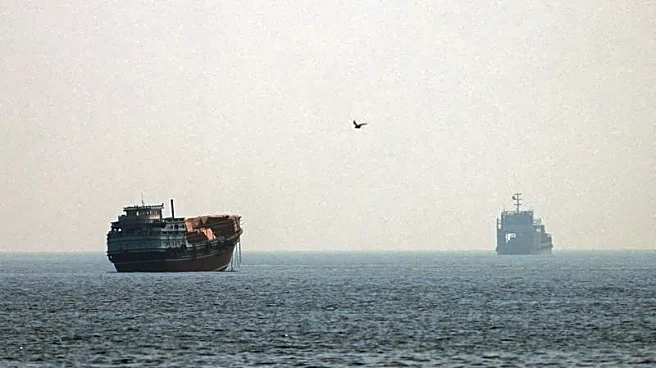
Shipping traffic in the Strait of Hormuz has decreased significantly, reaching a multi-week low, as tensions between the United States and Iran escalate. According to ship-tracking data from Kpler, only six vessels transited the strait on Sunday, marking
the lowest number in five weeks. This decline follows renewed US strikes on Iranian targets and attacks on ships in the Middle East, which have heightened safety concerns. The US Central Command confirmed that US forces conducted a series of precision strikes against multiple Iranian locations. Despite these tensions, President Trump stated that the Strait of Hormuz remains open to commercial traffic, although Iran had earlier claimed to have closed the strait after an incident involving a vessel on an unapproved route.
Why It's Important?
The Strait of Hormuz is a critical chokepoint for global oil transportation, with a significant portion of the world's oil supply passing through it. The recent slowdown in shipping traffic due to US-Iran tensions could have substantial implications for global oil markets, potentially affecting oil prices and supply chains. The situation underscores the vulnerability of international trade routes to geopolitical conflicts, which can disrupt the flow of goods and impact economies worldwide. Stakeholders in the oil industry, including producers and consumers, are likely to be affected by these developments, as any prolonged disruption could lead to increased volatility in oil prices.
What's Next?
The ongoing tensions between the US and Iran are likely to continue influencing shipping activities in the Strait of Hormuz. Stakeholders, including international shipping companies and oil producers, will be closely monitoring the situation for any further escalations or resolutions. Diplomatic efforts may be necessary to de-escalate the conflict and ensure the safe passage of vessels through the strait. Additionally, countries reliant on oil imports from the region may seek alternative routes or sources to mitigate potential supply disruptions.