






What's Happening?
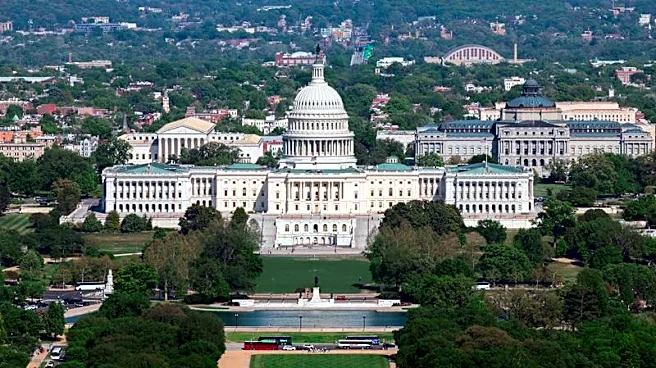
The U.S. Senate has narrowly passed a Department of Homeland Security (DHS) funding resolution following a late-night vote. This move advances a Republican-led effort to secure funding for Immigration and Customs Enforcement (ICE) without the support
of Democratic lawmakers. The urgency of the vote was driven by the need to prevent a potential funding shortfall for Transportation Security Administration (TSA) agents. The resolution's passage highlights the ongoing partisan divide over immigration enforcement funding, with Republicans pushing for increased ICE funding and Democrats opposing it due to concerns over immigration policies and enforcement practices.
Why It's Important?
The approval of the DHS funding resolution is significant as it underscores the contentious nature of immigration policy in the U.S. The decision to fund ICE without bipartisan support may exacerbate political tensions and impact future negotiations on immigration and border security. The potential funding shortfall for TSA agents could have implications for national security and airport operations, affecting travelers and the broader transportation sector. The outcome of this funding dispute may influence public opinion and voter sentiment ahead of upcoming elections, as immigration remains a polarizing issue in American politics.
What's Next?
The resolution's passage sets the stage for further legislative battles over immigration funding and policy. As the debate continues, stakeholders such as political leaders, advocacy groups, and the public will likely engage in discussions and lobbying efforts to influence future funding decisions. The resolution's impact on TSA operations will be closely monitored, with potential adjustments needed to ensure security and efficiency at airports. The ongoing partisan divide may also prompt calls for comprehensive immigration reform to address underlying issues and achieve a more sustainable and bipartisan approach to immigration policy.