





What's Happening?
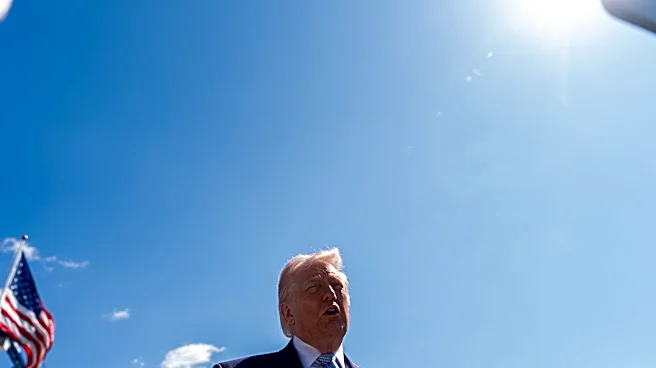
President Donald Trump announced a two-week ceasefire agreement between the United States and Iran, which is tied to the reopening of the Strait of Hormuz. This development was shared in a late-night social media post where President Trump described it as 'a
big day for World Peace!' The ceasefire aims to ease tensions in the region and ensure the safe passage of ships through the strategic waterway, which is crucial for global oil transportation. The agreement comes after heightened tensions between the two nations, with previous threats of military action and economic sanctions. The reopening of the Strait of Hormuz is expected to stabilize oil markets and reduce the risk of conflict in the region.
Why It's Important?
The ceasefire agreement between the U.S. and Iran is significant as it potentially averts military conflict and stabilizes a critical global trade route. The Strait of Hormuz is a vital passage for oil shipments, and its closure or restricted access could lead to increased oil prices and economic instability worldwide. By agreeing to a ceasefire, both nations demonstrate a willingness to engage in diplomatic solutions, which could pave the way for further negotiations on other contentious issues. This development may also influence U.S. foreign policy and its approach to handling international disputes, emphasizing diplomacy over military intervention.
What's Next?
Following the announcement of the ceasefire, stakeholders will likely monitor the situation closely to ensure compliance and assess the impact on regional stability. The reopening of the Strait of Hormuz will be watched by global markets, particularly the oil industry, for any signs of disruption or conflict. Political leaders and international organizations may seek to capitalize on this diplomatic breakthrough to encourage further dialogue between the U.S. and Iran. Additionally, there may be discussions on extending the ceasefire or addressing other geopolitical issues in the Middle East.