




What's Happening?
Kawasaki Heavy Industries (KHI) has introduced new conceptual designs for unmanned aerial vehicles (UAVs) under its Collaborative Support Aircraft (CSA) program. These UAVs are designed to operate alongside manned combat aircraft, enhancing the capabilities
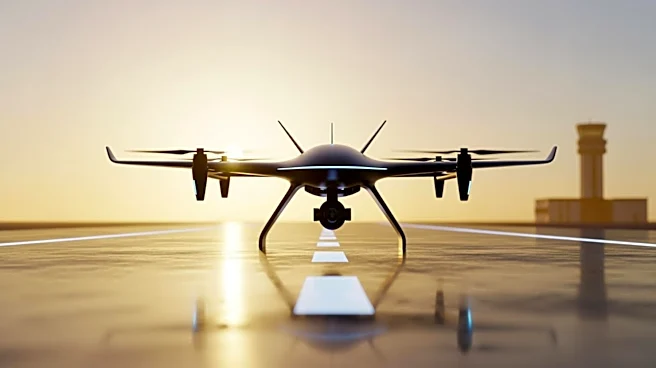
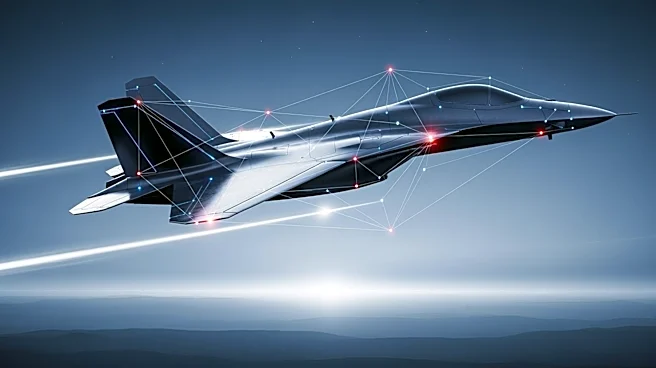
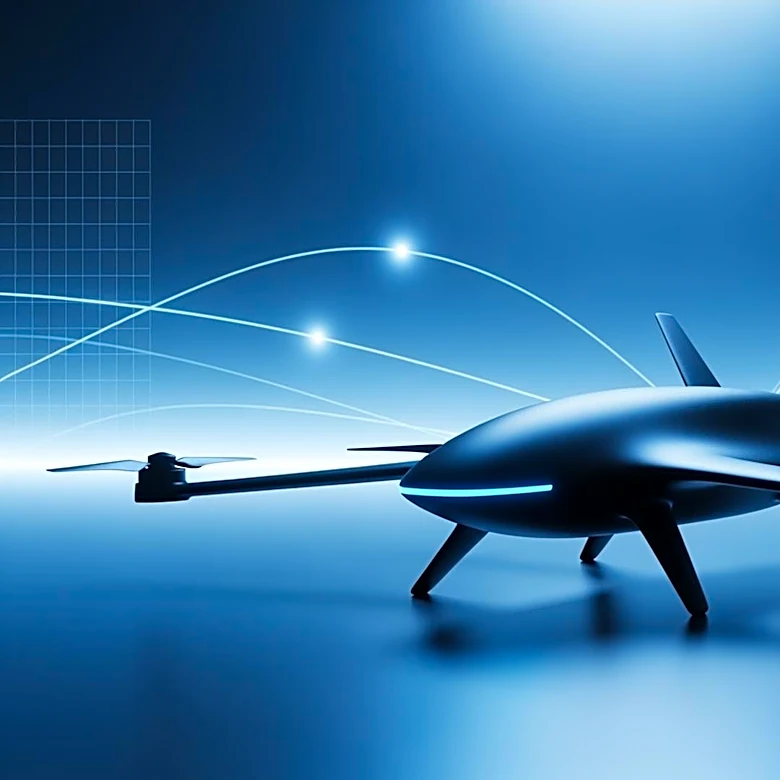
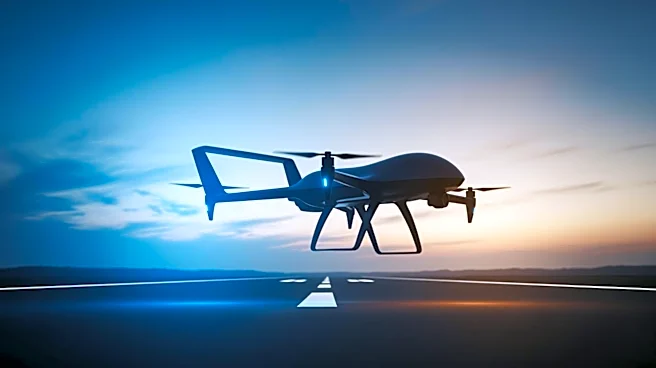
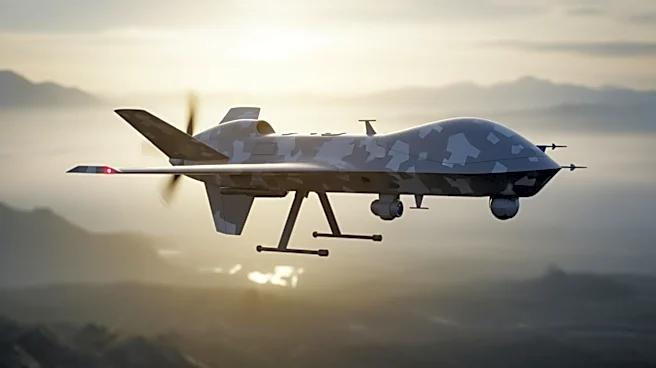
of the Japan Air Self-Defence Force (JASDF). The CSA includes two distinct UAV designs: a fighter-type platform with low-observable, blended-wing features, and a missile-shaped UAV with swept wings and twin tail fins. These UAVs are intended for roles in electronic warfare and intelligence, surveillance, and reconnaissance support. KHI plans to integrate artificial intelligence into these platforms to enable autonomous operations, reducing the workload on human operators. The UAVs are designed to undertake dangerous missions in contested environments, allowing manned aircraft to focus on their primary objectives.
Why It's Important?
The development of these UAVs by Kawasaki represents a significant advancement in military technology, particularly in enhancing the operational capabilities of the JASDF. By deploying UAVs for high-risk missions, the safety of human pilots is increased, and the efficiency of military operations is improved. The integration of artificial intelligence further enhances the strategic value of these UAVs, allowing for more complex and autonomous mission profiles. This development could influence global military strategies, as other nations may seek to adopt similar technologies to maintain competitive parity. Additionally, the use of open architecture and modular designs suggests a future-proofing approach, allowing for easy upgrades and adaptation to new mission requirements.
What's Next?
Kawasaki's focus on integrating AI and modular designs indicates ongoing development and potential future enhancements to the CSA program. As these UAVs are further developed and tested, they may see deployment in various military exercises and operations, providing valuable data and insights for further refinement. The success of this program could lead to increased collaboration between Kawasaki and other defense agencies, potentially expanding the use of these UAVs beyond Japan. Additionally, the international defense community will likely monitor these developments closely, as they may set new standards for UAV capabilities and integration with manned aircraft.