







What's Happening?
The Yaldei School in Montreal, Quebec, has completed a significant $4.5 million renovation aimed at improving the educational environment for children with intellectual disabilities. The project, undertaken by Stendel + Reich Architecture, focused on creating
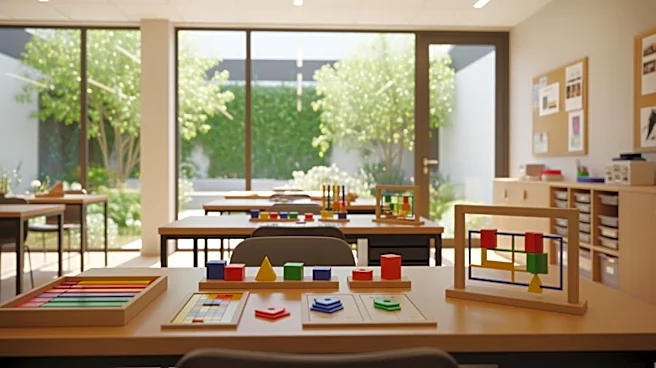
spaces that reduce anxiety and enhance the learning experience. Key features of the renovation include the redesign of corridors into oval shapes to aid navigation, inspired by designs used in Alzheimer’s facilities. Additionally, therapy rooms were modified to minimize distractions by using glass walls facing corridors instead of direct windows to the outside. The renovation also included the addition of new classrooms, an updated HVAC system, and accessible facilities, all aimed at providing comprehensive support to students aged 4 to 16.
Why It's Important?
This renovation is significant as it highlights the growing trend of designing educational spaces that cater specifically to the needs of students with disabilities. By incorporating architectural elements that reduce anxiety and improve navigation, the Yaldei School is setting a precedent for how educational facilities can be adapted to better serve students with special needs. This approach not only enhances the learning environment but also supports the overall well-being of the students. The project underscores the importance of inclusive design in education, which can lead to improved educational outcomes and greater opportunities for students with intellectual challenges.
What's Next?
Following the completion of the renovation, Yaldei School plans to continue adapting its facilities to meet increasing enrollment demands. Future plans include converting more rooms into fully equipped classrooms, ensuring that the school can accommodate more students and provide them with the necessary resources for success. The school’s commitment to expanding its range of services and therapies indicates a proactive approach to addressing the evolving needs of its student population. This ongoing development may inspire similar initiatives in other educational institutions, promoting a broader adoption of inclusive design principles.