
What's Happening?
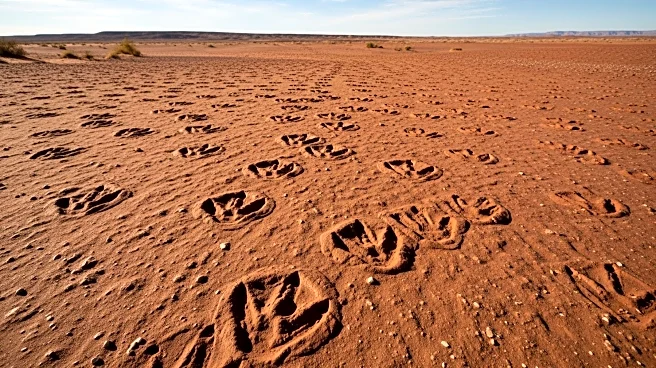
A team of paleontologists, primarily from California's Loma Linda University, has documented 16,600 dinosaur footprints in Toro Toro National Park, Bolivia. This discovery, published in the journal PLOS
One, represents the largest collection of theropod footprints globally. The footprints, dating back over 60 million years, provide a unique glimpse into dinosaur behavior, including attempts to swim. The site, once thought to be marked by supernatural creatures, is now recognized for its scientific significance. Despite the footprints' preservation, human activities such as farming and quarrying have posed threats to these ancient traces.
Why It's Important?
This discovery is significant as it offers a rare window into the behavior and movement of dinosaurs, particularly theropods, which include species like the Tyrannosaurus rex. The footprints provide insights that skeletal remains cannot, such as movement patterns and interactions with their environment. The site’s preservation challenges highlight the need for protective measures to safeguard such invaluable scientific resources. This research enhances our understanding of prehistoric life and underscores the importance of preserving natural history sites from human interference.
What's Next?
Future research is expected to continue at the Toro Toro site, with scientists anticipating the discovery of more footprints. Efforts to protect the site from further human impact are likely to be prioritized, potentially involving local and international conservation initiatives. The findings may also prompt further exploration of similar sites in the region, contributing to a broader understanding of dinosaur ecosystems and migration patterns.