



What's Happening?
The I.V. Savitsky State Art Museum in Nukus, Uzbekistan, is gaining international attention for its extensive collection of 20th-century art, including works that were once banned in the Soviet Union. The museum, located in the remote region of Karakalpakstan,
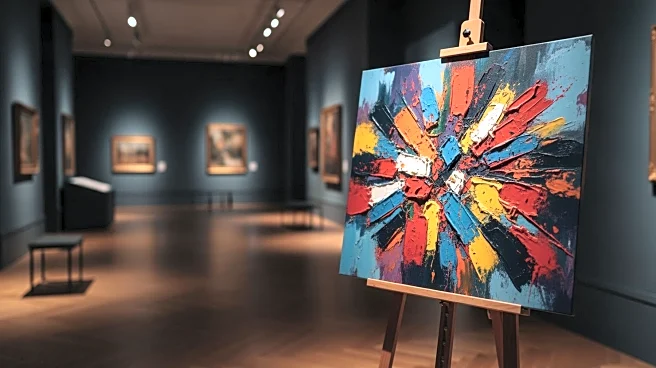
houses nearly 100,000 pieces, featuring Russian avant-garde and local folk art. Recent renovations and exhibitions, supported by the Art and Culture Development Foundation (ACDF), have transformed the museum into a major cultural destination. The museum's collection was showcased in Italy before returning to Nukus, where it is now displayed in a newly renovated space. The ACDF's efforts are part of a broader initiative to promote Uzbekistan's cultural heritage and boost tourism.
Why It's Important?
The revitalization of the Nukus Museum underscores the importance of preserving and promoting cultural heritage as a means of fostering national identity and economic development. By showcasing once-banned art, the museum not only preserves historical narratives but also challenges past censorship, offering a platform for dialogue and education. The museum's success in attracting international visitors highlights the potential of cultural tourism as a significant economic driver for Uzbekistan. This initiative aligns with the country's broader strategy to enhance its global cultural presence and attract foreign investment.
What's Next?
The ACDF plans to continue its efforts to promote Uzbekistan's cultural assets, with future exhibitions and collaborations likely to further elevate the country's profile on the international stage. The museum's ongoing digitization project will make its collection more accessible to a global audience, potentially leading to increased academic interest and tourism. Additionally, the success of the Nukus Museum could inspire similar initiatives in other regions, contributing to a nationwide cultural renaissance.