







What's Happening?
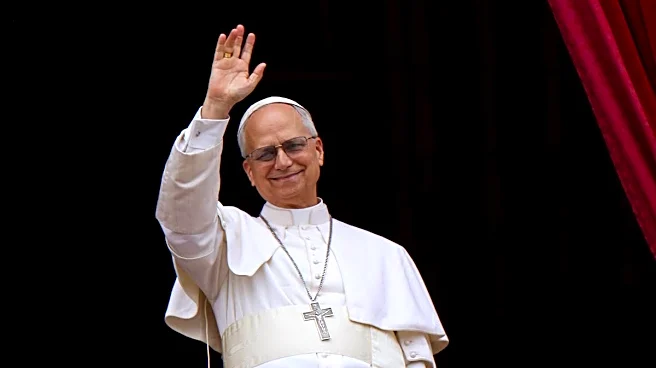
Pope Leo XIV's recent encyclical on artificial intelligence has sparked diverse reactions across the United States. The Pope's call for governments to slow AI development to prevent dehumanization has been met with both support and criticism. Former New
York council member Brad Lander praised the Pope's 'bold moral leadership,' while Florida representative Anna Paulina Luna expressed agreement with his sentiments. Conversely, U.S. Secretary of the Interior Doug Burgum questioned the Pope's involvement in tech discourse, and former White House AI and crypto czar David Sacks warned against government overreach in AI regulation. This division reflects broader debates on the role of technology in society and the balance between innovation and ethical considerations.
Why It's Important?
The varied responses to Pope Leo XIV's encyclical underscore the complex and often contentious nature of AI governance in the U.S. The Pope's intervention highlights the ethical dimensions of AI, prompting discussions on how to balance technological advancement with societal values. Supporters of the encyclical view it as a necessary moral check on unchecked technological growth, while critics fear that increased regulation could stifle innovation and lead to government overreach. This debate is crucial as it influences future policy decisions and the direction of AI development, impacting industries, privacy, and individual freedoms.