
What's Happening?
Rafael Advanced Defense Systems has announced a significant €300 million ($351 million) contract to integrate its Trophy active protection systems onto the Leopard 2 A8 main battle tanks used by Lithuania,
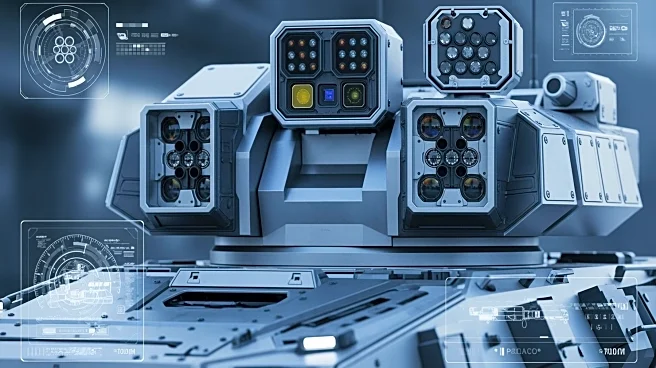
the Netherlands, Czech Republic, and Croatia. This deal will be executed by EuroTrophy GmbH, a joint venture involving General Dynamics European Land Systems, Leopard maker KNDS, and Rafael. The Trophy system, which has been previously integrated onto various Western armored platforms such as the American M1 Abrams and Israeli Merkava tanks, is designed to detect, track, and neutralize anti-tank threats in real time. It features sensors, a search radar, a firing computer, and an interceptor launcher, capable of engaging multiple threats simultaneously under various conditions.
Why It's Important?
The integration of the Trophy system into European Leopard 2 A8 tanks represents a significant enhancement in the defense capabilities of these nations. By equipping their tanks with this combat-proven technology, these countries aim to bolster their military readiness and protection against anti-tank threats. The system's ability to intercept threats like Kornet missiles and RPG rockets, as demonstrated during the Iron Swords war, underscores its effectiveness. This development not only strengthens the defense posture of the involved nations but also highlights the growing collaboration between European and Israeli defense industries, potentially influencing future defense procurement and strategic alliances.
What's Next?
The successful implementation of the Trophy system on the Leopard 2 A8 tanks could lead to further collaborations and contracts within Europe and beyond. As the system is marketed to other countries, there may be increased interest from nations seeking to upgrade their armored vehicle defenses. Additionally, the ongoing integration of Trophy onto other platforms, such as the K2 Black Panther tanks and lighter armored vehicles, suggests a broader application of this technology. Stakeholders, including military leaders and defense contractors, will likely monitor the system's performance closely to assess its impact on military operations and future procurement decisions.