

What's Happening?
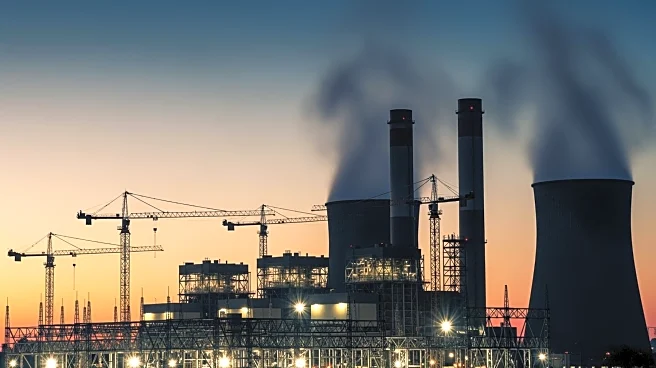
The U.S. administration, under President Trump, is pushing for the construction of baseload power plants, specifically coal, natural gas, and nuclear, to meet the increasing power demands driven by data centers and the electrification of the economy.
U.S. Interior Secretary Doug Burgum emphasized the need for these power sources to maintain energy reliability. However, the construction of such plants faces significant hurdles, including extended lead times and increased costs. The average time to bring a gas plant online has risen from 3.5 to 5 years, and the cost of building efficient combined-cycle gas plants has surged by 49%. The demand for gas turbines has also spiked, with manufacturers like GE Vernova sold out through 2028. The administration's plan excludes renewable energy, focusing instead on traditional baseload sources.
Why It's Important?
This development highlights a critical juncture in U.S. energy policy, where the need for reliable power sources is clashing with environmental and economic considerations. The administration's focus on gas and nuclear power underscores a strategic shift away from renewables, which could impact the U.S.'s ability to meet climate goals. The push for traditional energy sources may provide stability and meet immediate power demands, but it also risks sidelining cleaner energy alternatives. This approach could influence energy markets, regulatory frameworks, and investment strategies, affecting stakeholders across the energy sector, including utilities, tech companies, and environmental groups.
What's Next?
The administration is advocating for an emergency wholesale electricity auction to facilitate the construction of new power plants. This auction would allow tech companies to bid on long-term contracts, potentially supporting $15 billion in new plant investments. However, the exclusion of renewable energy from this plan may provoke opposition from environmental advocates and some political leaders. The outcome of this auction and the administration's energy strategy will likely shape the future of U.S. energy infrastructure and policy, influencing debates on energy independence, climate change, and economic growth.
Beyond the Headlines
The administration's stance raises questions about the long-term sustainability of relying on fossil fuels and nuclear power. While these sources can provide immediate energy solutions, they also pose environmental and safety risks. The exclusion of renewables could hinder progress towards a more sustainable energy future, potentially affecting the U.S.'s global standing in climate leadership. Additionally, the focus on traditional energy sources may lead to regulatory and legal challenges, as stakeholders push for more inclusive and environmentally friendly energy policies.