





What's Happening?
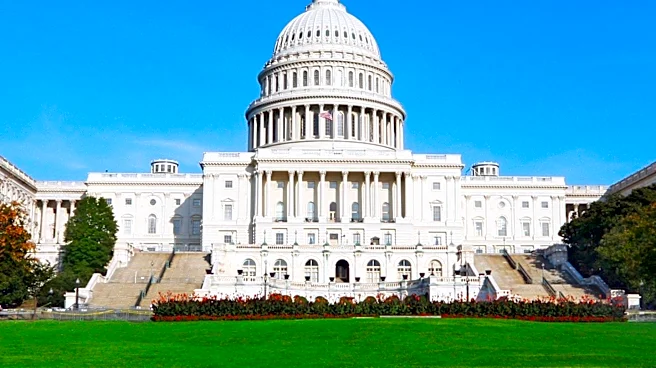
North Carolina Attorney General Jeff Jackson, alongside a bipartisan coalition of 25 other attorneys general, has urged Congress to establish federal regulations and safety standards for artificial intelligence (AI). In a letter sent to congressional
leaders, the coalition emphasized the immediate need for action due to recent AI incidents and potential threats to financial systems, critical infrastructure, and national security. The attorneys general are advocating for federal oversight that includes AI safety testing, consistent performance benchmarks, transparent incident investigations, and mandatory safety infrastructure. They also seek international cooperation on the pace of AI development, protections against harmful AI applications, and safeguards to prevent federal regulations from undermining competition or overriding existing state laws. Attorney General Jackson, who co-leads a nationwide bipartisan AI Task Force, has previously addressed AI-related issues such as AI-generated nonconsensual sexual images, child protection, and deepfake technology.
Why It's Important?
This bipartisan call for federal AI regulation signifies a growing recognition among state legal officials of the urgent need for comprehensive oversight of rapidly advancing AI technology. The concerns raised about potential threats to financial systems, critical infrastructure, and national security highlight the broad societal and economic implications of unregulated AI. Establishing federal standards could provide a unified framework for AI development and deployment across the U.S., potentially preventing a patchwork of state-specific regulations that could hinder innovation or create legal inconsistencies. This initiative is crucial for fostering public trust in AI, ensuring its responsible development, and mitigating risks associated with its misuse. The involvement of a bipartisan coalition underscores the widespread concern and the potential for collaborative action on this complex issue, which could impact various industries, from technology to finance and defense.
What's Next?
The letter from the coalition of attorneys general will likely prompt further discussion and potentially legislative action in Congress regarding AI regulation. Lawmakers will need to consider the proposed areas of federal oversight, including safety testing, performance benchmarks, and incident investigations. The call for international cooperation suggests that future regulatory efforts may involve global partnerships to address the transnational nature of AI development and its potential impacts. Stakeholders, including technology companies, civil society groups, and legal experts, will likely engage in discussions to shape the scope and specifics of any forthcoming federal AI legislation. The ongoing work of Attorney General Jackson's bipartisan AI Task Force will continue to inform these efforts, potentially leading to more concrete proposals for federal intervention in AI governance. The development of these regulations will be a critical step in shaping the future of AI in the U.S. and globally.
Beyond the Headlines
The push for federal AI regulation delves into profound ethical and societal questions about the control and impact of advanced technology. The concerns about 'harmful artificial intelligence' and 'deepfake technology' highlight the potential for AI to be used for malicious purposes, raising issues of privacy, misinformation, and democratic integrity. The debate over federal oversight versus state laws also touches on the balance of power between different levels of government in regulating emerging technologies. Furthermore, the call for international cooperation underscores the global nature of AI development and the need for a coordinated approach to address its challenges. This initiative could set a precedent for how governments worldwide approach the regulation of rapidly evolving technologies, influencing future policies on data privacy, algorithmic transparency, and the ethical deployment of AI in various sectors.