









What's Happening?
The Indian Navy's Explosive Ordnance Disposal (EOD) specialists have successfully removed an unexploded missile from the hull of the Greek-owned Very Large Crude Carrier (VLCC) named Olympic Life. The tanker, which departed from Fujairah, UAE, in late
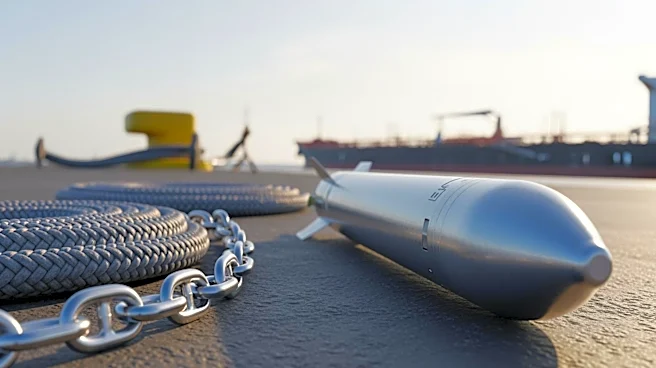
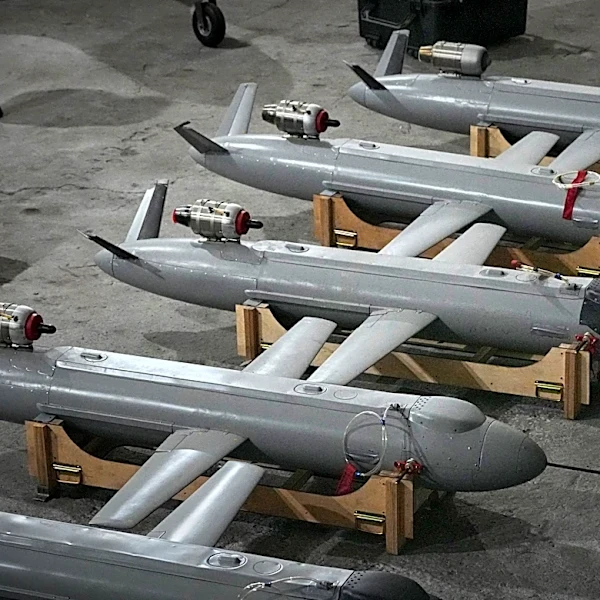
May, was en route to Kochi when it was struck by a missile on May 26. Despite sustaining a significant hole and retaining the unexploded missile, the vessel managed to continue its journey. Upon arrival in Kochi, the crew informed Indian authorities about the missile embedded belowdecks. The Southern Naval Command dispatched an EOD team to safely extract the missile, which had penetrated multiple bulkheads and lodged in a fuel tank. The team carefully evaluated the device, isolated its detonator, and successfully removed the warhead and missile remains. The components have been taken to a storage site for further inspection.
Why It's Important?
This incident underscores the Indian Navy's capability and readiness to handle complex maritime threats, enhancing its reputation as a responsible maritime force. The successful removal of the missile without causing further damage or explosion highlights the expertise of the EOD team and their critical role in ensuring maritime safety. This operation also reflects the Navy's commitment to global maritime security, regardless of the nationality of the vessel involved. The incident could have had severe consequences for the crew and the environment had the missile detonated, emphasizing the importance of rapid and skilled intervention in such scenarios.
What's Next?
Following the successful extraction of the missile, the Olympic Life has completed necessary repairs and has departed for Singapore. The Indian Navy will likely continue to monitor the situation and may conduct further inspections of the recovered missile components to gather intelligence on the origins and potential threats posed by such unexploded ordnance. This incident may prompt discussions on enhancing maritime security protocols and collaboration among international naval forces to prevent similar occurrences in the future.