




What's Happening?
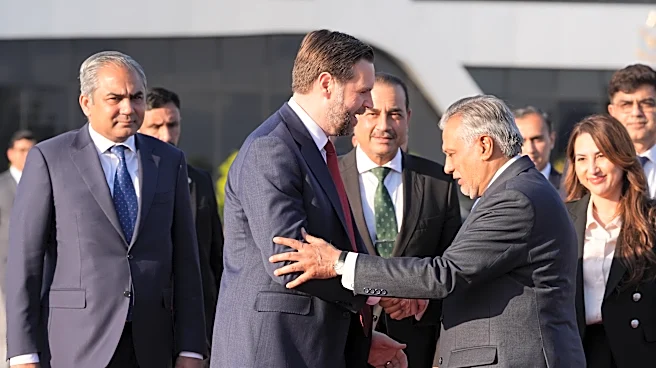
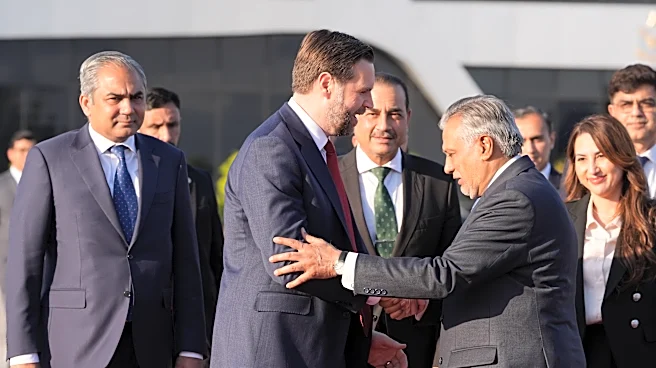
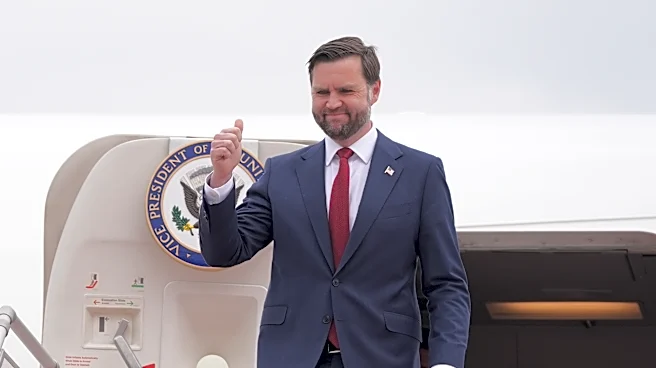
The ongoing standoff between the United States and Iran has intensified as the U.S. declared a blockade on Iranian ports, prompting Tehran to threaten regional strikes. In response, Pakistan has proposed hosting a second round of talks to de-escalate
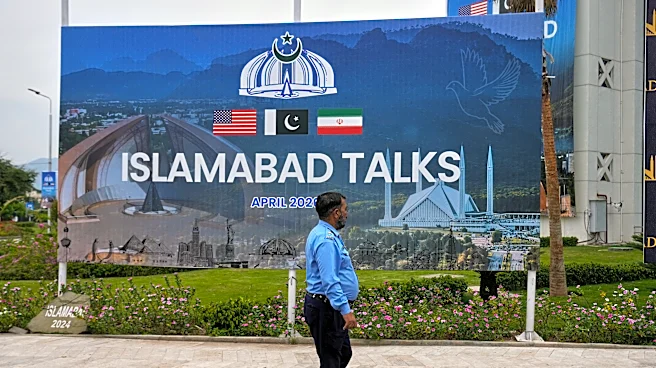
tensions. The initial talks, which aimed to address the conflict that began with U.S. and Israeli strikes on Iran, failed to reach an agreement. The proposed talks could take place in Islamabad or Geneva, with discussions still underway regarding the specifics. The conflict has significantly impacted global markets, with shipping disruptions and airstrikes affecting military and civilian infrastructure across the region.
Why It's Important?
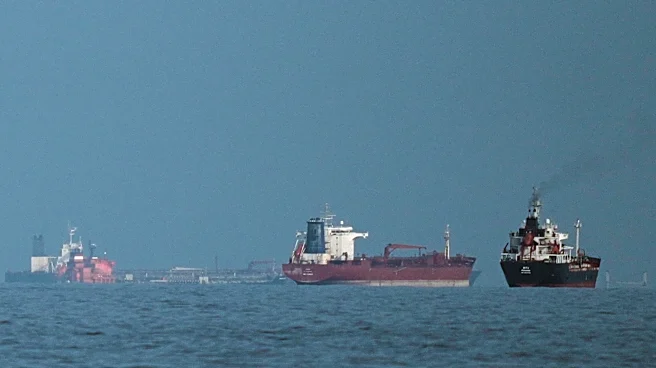
The blockade and ongoing conflict have severe implications for global oil supply, as the Strait of Hormuz is a critical chokepoint for oil transit. The U.S. blockade aims to pressure Iran by cutting off its oil exports, which are vital for its economy. The situation has led to increased oil prices, affecting global markets and contributing to economic instability. The potential for further escalation poses risks to regional security and could lead to broader international involvement. The proposed talks represent a diplomatic effort to prevent further conflict and stabilize the region, which is crucial for maintaining global economic stability.
What's Next?
If the proposed talks proceed, they could provide a platform for de-escalating tensions and addressing key issues such as Iran's nuclear ambitions. However, the success of these talks depends on the willingness of both parties to compromise and the ability of mediators to facilitate constructive dialogue. The international community, including countries like France and the UK, may play a role in supporting these efforts. The outcome of the talks could influence future U.S. foreign policy and its approach to Middle Eastern conflicts.