




What's Happening?
Conservative activist Riley Gaines has responded to President Donald Trump's recent social media post, which featured an AI-generated image of himself as a Jesus-like figure. The image, which was shared on Sunday, drew criticism from several Trump supporters,
including Gaines, a former NCAA swimmer. Gaines expressed her disapproval on social media, questioning Trump's intentions and suggesting that humility would benefit him. In response to the backlash, President Trump deleted the post, explaining that it was misunderstood and intended to depict him as a doctor related to the Red Cross. He clarified that Gaines' criticism did not influence his decision to remove the image, as he is not a fan of hers. Despite the controversy, Gaines reiterated her support for Trump and his America First agenda, emphasizing her focus on glorifying God rather than seeking human approval.
Why It's Important?
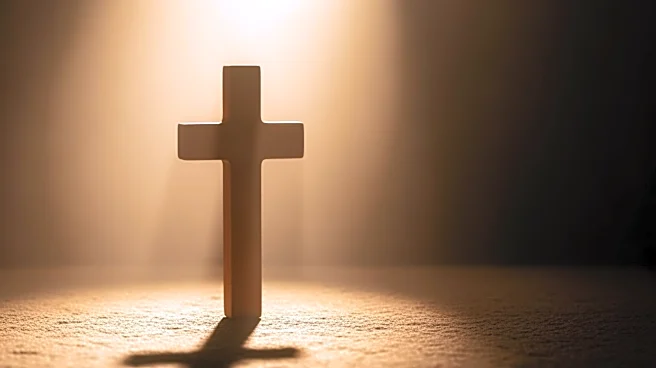
The incident highlights the ongoing tension between President Trump and some of his supporters, particularly those with strong religious convictions. The use of religious imagery in political contexts can be polarizing, potentially alienating segments of Trump's base who view such depictions as blasphemous. This controversy underscores the delicate balance political figures must maintain when engaging with religious symbolism, as it can provoke strong reactions and impact public perception. For Trump, who relies heavily on the support of conservative Christians, navigating these sensitivities is crucial for maintaining his political influence and support base.
What's Next?
As the situation develops, it remains to be seen how President Trump will address the concerns of his religious supporters and whether this incident will affect his standing among them. The response from other conservative leaders and religious groups could further shape the narrative and influence Trump's future actions. Additionally, the incident may prompt discussions within the conservative community about the appropriate use of religious imagery in political discourse and the potential consequences of such actions.