
What's Happening?
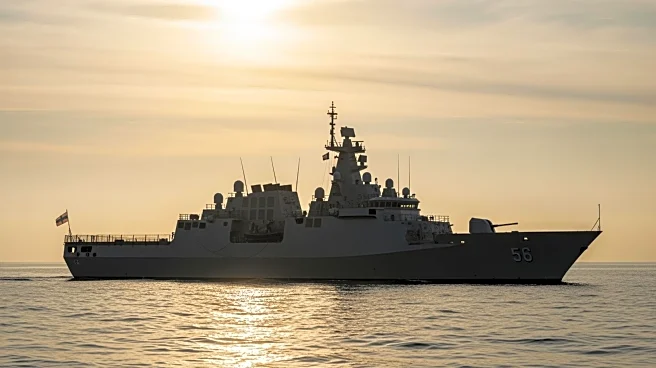
Prime Minister Narendra Modi has lauded the commissioning of the Indian Coast Guard Ship (ICGS) Samudra Pratap, a home-built pollution control vessel, as a significant step towards self-reliance and sustainability.
The ship, commissioned by Defence Minister Rajnath Singh, is the first of two indigenously built pollution control vessels for the Indian Coast Guard and is the largest in their fleet. Built by Goa Shipyard Limited, Samudra Pratap is equipped with advanced pollution detection systems, specialized pollution response boats, modern firefighting equipment, and aviation facilities, including a helicopter hangar. These features enable the vessel to operate effectively even in rough sea conditions. The ship also marks a milestone in gender inclusivity, with two women officers onboard, reflecting a move towards a more inclusive and gender-neutral Coast Guard.
Why It's Important?
The commissioning of Samudra Pratap is a critical development for India's maritime capabilities, enhancing the country's ability to manage and respond to pollution incidents at sea. This move aligns with India's broader vision of self-reliance, particularly in defense and maritime sectors, reducing dependency on foreign technology and equipment. The inclusion of women officers on the vessel signifies progress towards gender equality in traditionally male-dominated fields, setting a precedent for future maritime operations. The ship's advanced capabilities not only bolster India's security apparatus but also demonstrate a commitment to environmental sustainability, crucial in the context of increasing global environmental challenges.
What's Next?
Following the commissioning of Samudra Pratap, the Indian Coast Guard is expected to enhance its operational readiness and response capabilities in maritime pollution control. The integration of advanced technology and gender inclusivity may prompt further developments in the Coast Guard's operational strategies and personnel policies. Additionally, the successful deployment of this vessel could encourage further investments in indigenous shipbuilding and technology development, supporting India's defense and maritime industries.
Beyond the Headlines
The commissioning of Samudra Pratap highlights the intersection of defense, environmental sustainability, and gender inclusivity. As India continues to build its maritime capabilities, the focus on indigenous development and sustainability could influence regional maritime policies and collaborations. The presence of women officers on the vessel may inspire similar initiatives across other branches of the Indian armed forces, promoting diversity and inclusion in defense roles.