
What's Happening?
The tourism industry is anticipated to undergo significant transformations by the year 2126, driven by rapid technological advancements and shifting societal priorities. According to an analysis by the German
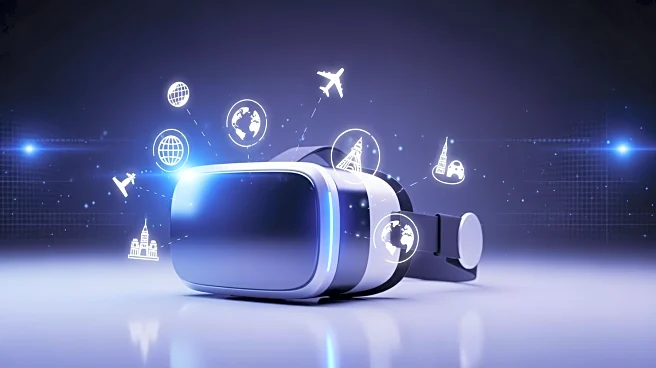
online travel platform Urlaubsguru, future travel will be characterized by extreme personalization through artificial intelligence (AI), with a focus on health and longevity. Virtual travel is expected to replace some physical travel, offering immersive experiences that incorporate sight, sound, smell, temperature, and air pressure. This shift is partly in response to global challenges such as climate change, which limits access to popular destinations. Additionally, space tourism is projected to become more accessible, moving from an elite privilege to a common adventure.
Why It's Important?
The anticipated changes in the tourism industry could have profound implications for global travel patterns and the economy. The rise of virtual travel could alleviate the environmental impact of mass tourism on fragile ecosystems, offering a sustainable alternative that reduces physical crowding. This shift could also democratize access to travel experiences, allowing more people to explore distant or otherwise inaccessible locations. The integration of AI in travel planning promises to enhance personalization, potentially increasing customer satisfaction and loyalty. However, these advancements also raise questions about the loss of spontaneity and the potential for digital experiences to replace genuine human connections. The expansion of space tourism could open new economic opportunities and inspire technological innovations, but it also necessitates careful consideration of ethical and environmental responsibilities.
What's Next?
As the tourism industry evolves, stakeholders will need to address several challenges and opportunities. Policymakers and industry leaders must ensure that technological advancements in travel remain inclusive and environmentally sustainable. The development of virtual travel technologies will require significant investment in research and infrastructure, as well as collaboration between tech companies and tourism operators. The potential for space tourism to become mainstream will depend on advancements in space travel technology and cost reductions. Additionally, there will be a need for regulatory frameworks to manage the ethical implications of AI-driven travel experiences and the environmental impact of increased space travel.
Beyond the Headlines
The shift towards virtual and space tourism highlights broader cultural and ethical considerations. As travel becomes more technologically mediated, there is a risk of diminishing the serendipitous experiences that make travel unique. The reliance on AI for travel planning could lead to a homogenization of experiences, where algorithms prioritize convenience over discovery. Furthermore, the expansion of space tourism raises questions about the commercialization of space and the potential impact on celestial environments. As these trends unfold, it will be crucial to balance technological innovation with the preservation of authentic travel experiences and the protection of natural and extraterrestrial environments.