
What's Happening?
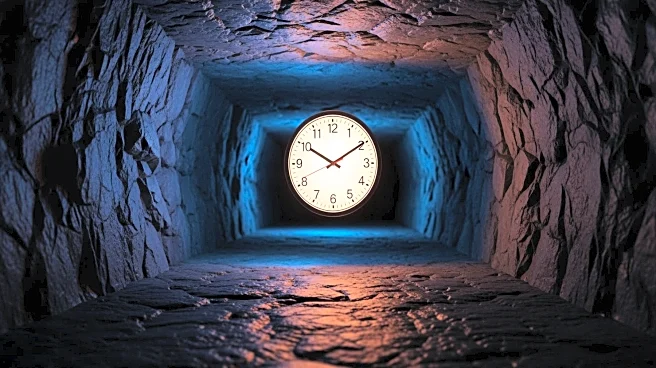
In the early 1960s, French geologist Michel Siffre conducted a groundbreaking experiment by living in a cave for 63 days without exposure to natural light or timekeeping devices. This experiment aimed
to study the effects of isolation on human circadian rhythms. Siffre's findings revealed that in the absence of external time cues, his sleep-wake cycle extended beyond the typical 24-hour period, sometimes reaching up to 48 hours. This research provided early evidence of the body's internal clock, which operates independently of external light and time markers. Siffre's work laid the foundation for further studies on human circadian behavior, particularly in environments where natural time cues are absent, such as space missions and submarine operations.
Why It's Important?
Siffre's experiment has significant implications for understanding human physiology in isolated and extreme environments. His findings have influenced research in chronobiology, the study of biological rhythms, and have been particularly relevant to space agencies like NASA. The insights gained from Siffre's work have helped shape strategies for managing the psychological and physiological challenges faced by astronauts during long-duration space missions. Additionally, the research has applications in military operations, particularly for submarine crews who operate in sealed environments for extended periods. Understanding circadian rhythms is also crucial for improving health outcomes in various fields, including oncology and mental health, by aligning treatments with the body's internal clock.
What's Next?
The exploration of human circadian rhythms continues to evolve, with ongoing research into how these biological cycles can be optimized in different settings. Space agencies are conducting simulations of Mars missions and other isolated environments to test human resilience and performance. In the medical field, researchers are investigating how aligning treatments with circadian rhythms can enhance patient outcomes. The principles of chronobiology are also being applied in workplaces to improve alertness and decision-making among shift workers and emergency personnel. As interest in circadian rhythms grows, new strategies and technologies are likely to emerge, further expanding our understanding of human time perception and its impact on health and performance.
Beyond the Headlines
Siffre's work has highlighted the brain's adaptability and vulnerability when separated from natural light-dark cycles. His observations of cognitive challenges, such as memory lapses and emotional flattening, have been echoed in studies of sensory deprivation and confinement. These findings underscore the importance of considering circadian rhythms in the design of environments and schedules for individuals in isolated or extreme conditions. The research also raises ethical considerations about the impact of modern lifestyles, characterized by irregular light exposure and screen time, on circadian alignment and overall well-being.