




What's Happening?
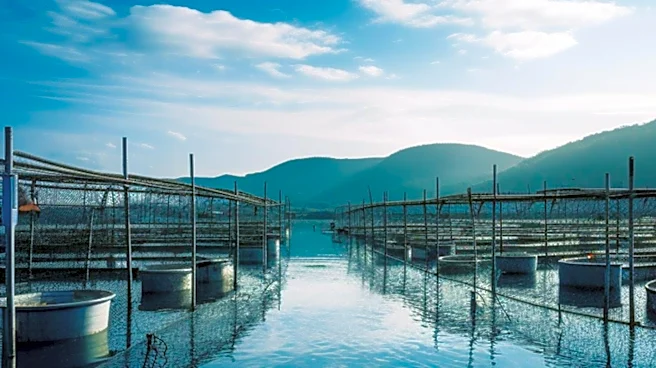
Precision Microbiome Engineering (PME) is emerging as a dual strategy to address environmental and public health challenges in aquaculture. Global aquaculture production is rapidly increasing, leading to issues such as eutrophication from excessive nitrogen
and phosphorus, and the proliferation of antimicrobial resistance (AMR) due to the widespread use of antibiotics. PME involves manipulating microbial communities in fish guts and production water to enhance nutrient removal and reduce pathogenic and resistant microorganisms. This approach integrates various strategies, including classical probiotics, heat-inactivated paraprobiotics, metabolite-rich postbiotics, prebiotic-probiotic synbiotics, and precisely designed synthetic microbial communities (SynComs). These interventions aim to improve fish health, disease resistance, and overall system productivity while simultaneously remediating aquaculture wastewater. Advanced technologies like biofloc technology (BFT) and moving bed biofilm reactors (MBBR) are also being utilized to reduce nitrogen, phosphorus, and organic carbon in effluents.
Why It's Important?
The rapid growth of the aquaculture industry, while meeting increasing demand for animal protein, poses significant environmental and public health risks. The discharge of nutrient-rich wastewater contributes to eutrophication, harming aquatic ecosystems. More critically, the extensive use of antibiotics in aquaculture creates breeding grounds for antibiotic resistance genes (ARGs) and organisms with antimicrobial resistance (AMR), which can spread to humans and animals, posing a serious global health threat. PME offers a sustainable solution by reducing reliance on chemotherapeutic agents and improving water quality. By enhancing fish immunity and removing pollutants, PME can mitigate the spread of AMR and reduce the environmental impact of aquaculture. This approach is crucial for ensuring the long-term viability and sustainability of the aquaculture sector, particularly in regions like Asia-Pacific and Latin America, which account for over 80% of global aquaculture output and require policy and biotechnological reforms to lessen antibiotic dependency.
What's Next?
Future advancements in PME will heavily rely on the integration of multi-omics technologies and artificial intelligence (AI) to create predictive and controlled aquaculture systems. Multi-omics platforms, including metagenomics, metatranscriptomics, and metabolomics, will provide a comprehensive understanding of microbial community structure and function, enabling the identification of key taxa and pathways for nutrient cycling and pathogen suppression. AI and machine learning will complement these advancements by facilitating real-time monitoring, predictive analysis, and decision-making in aquaculture management. The deployment of edge computing AI and IoT biosensor networks will allow for controlled probiotic dosing, carbon-nitrogen ratio manipulation in BFT, and aeration cycling in MBBR technologies. Furthermore, nanopore-based sequencing will enable rapid, on-site ARG monitoring in water effluents, allowing for real-time management of bioremediation consortia. The development of a publicly accessible, high-quality reference database for commercially important aquaculture species is also a prerequisite for coordinating data sharing internationally.
Beyond the Headlines
The development of Precision Microbiome Engineering (PME) highlights a broader shift towards integrated, ecosystem-level solutions for complex environmental and health challenges. The interconnectedness of host-associated microbiomes and environmental microbial communities in aquaculture systems underscores the need for holistic approaches that move beyond treating symptoms in isolation. The ethical and regulatory challenges surrounding genetically modified organisms (GMOs) in food production, particularly in the context of CRISPR-Cas9-based gene-level editing for enhanced probiotic strains, will require careful consideration and harmonized international frameworks. The potential for horizontal gene transfer (HGT) of resistance genes from introduced microbial populations to native ones in open aquaculture systems also raises significant biosafety concerns. Addressing these issues will involve stringent biosafety evaluation protocols, including whole-genome sequencing and antibiotic susceptibility profiling. The economic sustainability of modern bioremediation methods, especially for smaller farms in developing nations, remains a critical barrier, necessitating cost-efficient and accessible solutions. Ultimately, PME represents a paradigm shift towards a more sustainable and resilient aquaculture industry, with implications for global food security and public health.