




What's Happening?
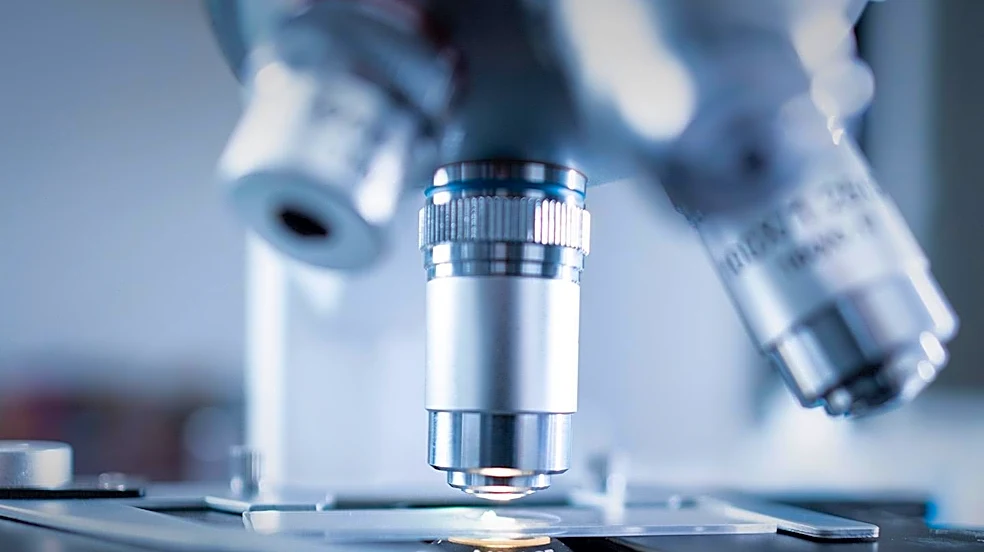
Researchers at the University of California, Berkeley, have developed a groundbreaking microscope named Theia, which utilizes an exceptionally powerful laser to enhance the visibility of previously invisible cellular structures. This new technology, detailed
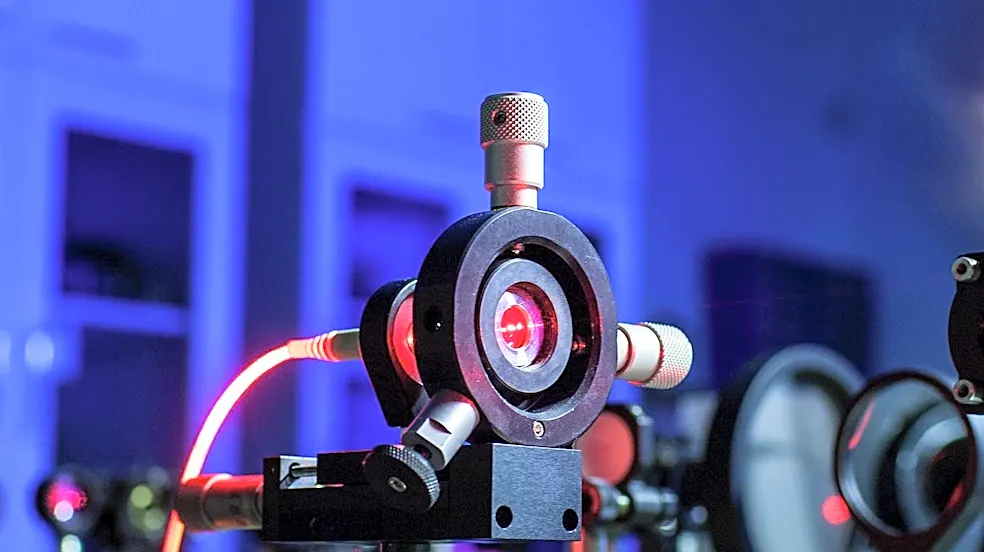
in the journal Science, applies the principle of phase contrast to electron microscopy, a method capable of magnifying objects 10,000 times more than traditional light microscopes. The laser phase plate interacts directly with the microscope's electron beam, altering its phase to significantly increase image contrast. This innovation aims to overcome a major limitation in cryoelectron microscopy (cryo-EM), which struggles to produce clear images of very small human proteins. Theia can potentially image proteins one-third the size of those challenging current microscopes, and it is expected to revolutionize cryoelectron tomography (cryo-ET) by providing clearer 3D views of proteins interacting within their natural cellular environments. The development was led by Holger Müller, a UC Berkeley professor of physics, with financial support from Biohub, and involves collaboration with Thermo Fisher Scientific.
Why It's Important?
This advancement holds significant implications for biological research and drug discovery in the U.S. By enabling clearer visualization of small proteins and their interactions within cells, the new microscope could unlock a deeper understanding of fundamental biological processes. This is crucial because approximately 90% of the human proteome consists of proteins smaller than 70 kilodaltons, which conventional cryo-EM struggles to image. The ability to study these smaller proteins, down to 50 kilodaltons and potentially 17 kilodaltons, could lead to breakthroughs in understanding disease mechanisms and developing more targeted therapies. For the pharmaceutical industry, this technology could accelerate drug discovery by providing unprecedented insights into molecular structures. Furthermore, the collaboration between academic institutions like UC Berkeley and industry partners like Thermo Fisher Scientific highlights the synergistic approach to scientific innovation in the U.S., potentially setting new standards for microscopy and biomedical research.
What's Next?
The Berkeley team and Biohub are continuing to refine the laser phase plate technology. Biohub is constructing a related microscope that uses two lasers to further prevent component burnout and reduce optical distortions, building on theoretical research from Müller's team. Both research groups are working with Thermo Fisher Scientific, a leading manufacturer of cryo-EM instruments, to integrate and potentially commercialize this technology. Future goals include further improving the technology to study even smaller proteins, potentially down to 17 kilodaltons, by using a tightly focused electron beam to double contrast and signal-to-noise ratio. This ongoing development aims to make a far larger proportion of the body's proteins accessible for study, promising unprecedented insights into cellular functions and disease. The scientific community will be closely watching for further publications and demonstrations of the microscope's capabilities.
Beyond the Headlines
The development of Theia represents a significant leap in scientific imaging, echoing the impact of the original phase contrast microscopy that earned a Nobel Prize in 1953. This technological advancement underscores a long-standing quest in biology to visualize the intricate machinery of life at its most fundamental level. The ability to see what was once invisible could fundamentally alter our understanding of health and disease, moving beyond static structural analysis to dynamic, in-context observations of molecular machines. Ethically, this enhanced visualization capability could raise new questions about the boundaries of what can be observed and manipulated in biological systems. Legally, the intellectual property surrounding such advanced microscopy techniques will be crucial for future development and commercialization. Culturally, such breakthroughs reinforce the U.S.'s position as a leader in scientific innovation, attracting top talent and investment in cutting-edge research.