




What's Happening?
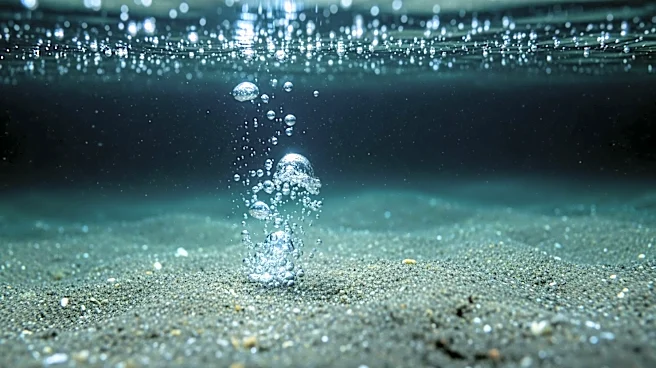
Researchers at the University of Rochester have discovered a new source of methane production in the open ocean, which could exacerbate global warming. The study, published in the Proceedings of the National Academy of Sciences, reveals that certain bacteria
produce methane in oxygen-rich waters when phosphate levels are low. This process, previously unrecognized, suggests that methane emissions from the ocean may be more common than thought, particularly in areas with phosphate scarcity. As climate change warms the ocean, the density difference between surface and deep waters increases, potentially reducing nutrient mixing and creating conditions favorable for methane-producing microbes.
Why It's Important?
Methane is a potent greenhouse gas, and its increased release from the ocean could contribute significantly to global warming. This discovery highlights a potential feedback loop where warming oceans lead to more methane emissions, further accelerating climate change. Understanding these processes is crucial for improving climate models and predictions, as current models often overlook such interactions. The findings underscore the need for comprehensive strategies to address climate change, considering both human-induced and natural greenhouse gas sources.
Beyond the Headlines
The study emphasizes the importance of microscopic ocean processes in global climate dynamics. As scientists work to refine climate models, incorporating these findings could be critical for accurate predictions. The research also raises questions about the long-term impacts of nutrient depletion in ocean ecosystems and the role of microbial activity in climate regulation.