



What's Happening?
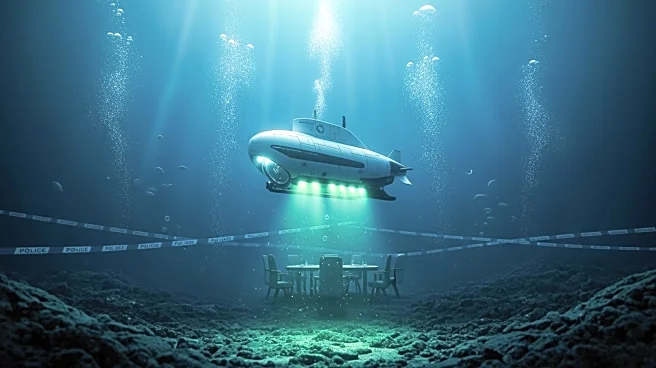
An international research team is preparing for a robotic expedition to investigate the phenomenon of 'dark' oxygen detected in the Pacific Ocean's depths. The mission, funded by the Nippon Foundation, aims to uncover the source of this unexpected oxygen,
which was first discovered by Andrew Sweetman's team while studying polymetallic nodules. The team suspects a catalytic reaction or a biological process might be responsible. The upcoming expedition will deploy advanced instruments to measure pH levels and other variables, potentially revealing new insights into deep-sea ecosystems and the role of these nodules.
Why It's Important?
Understanding the source of dark oxygen could have significant implications for marine science and resource management. The findings may reveal new biological processes or chemical reactions occurring in deep-sea environments, contributing to the broader understanding of oceanic ecosystems. This knowledge is crucial for assessing the environmental impact of potential deep-sea mining activities, as polymetallic nodules contain valuable metals like cobalt and manganese. The research could guide sustainable mining practices, minimizing ecological damage and preserving marine biodiversity.
What's Next?
The research team plans to conduct laboratory experiments simulating deep-sea conditions to further investigate the electrochemical properties of the nodules. These experiments will help determine if the nodules catalyze water splitting, producing dark oxygen. The results could influence future policies on deep-sea mining and conservation strategies. The scientific community will closely monitor the expedition's findings, which may prompt further research into unexplored oceanic phenomena and their implications for global marine ecosystems.