





What's Happening?
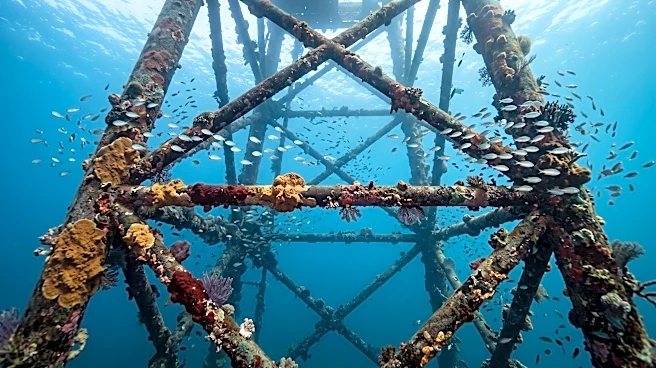
Representative Mike Ezell's Marine Fisheries Habitat Protection Act (H.R. 5745) has successfully passed the House Committee on Natural Resources and is now moving towards consideration by the full House. The bipartisan bill aims to establish a clearer
federal process for converting eligible decommissioned offshore oil and gas structures into artificial reefs, building upon the existing 'Rigs to Reefs' initiative. This legislation would formalize procedures, timelines, and reporting requirements while maintaining essential safety, navigation, and environmental safeguards. The National Ocean Industries Association (NOIA) has applauded the advancement of the bill, emphasizing its potential to strengthen offshore rigs-to-reefs programs. According to NOIA President Erik Milito, offshore energy infrastructure often becomes valuable marine habitat, particularly in areas like the Gulf of America where natural reef habitat is limited. The bill seeks to preserve this habitat and extend the benefits of offshore infrastructure after energy production ceases.
Why It's Important?
This legislation is significant for marine conservation and the sustainable use of offshore infrastructure in the U.S. By creating a more defined federal process for the 'Rigs to Reefs' program, it could lead to an increase in artificial reef creation, which supports marine life, enhances fisheries, and benefits recreational activities. The bill's bipartisan support underscores a shared interest in practical conservation solutions that leverage existing infrastructure for ecological benefit. For the offshore energy industry, it provides a structured pathway for decommissioning, potentially offering an environmentally beneficial alternative to full removal. Coastal communities that rely on healthy fisheries and marine recreation could see economic advantages from expanded marine habitats. Furthermore, the bill directs the Bureau of Safety and Environmental Enforcement to report on idle structures and reefing applications, which could improve oversight and planning for future reefing projects.
What's Next?
The Marine Fisheries Habitat Protection Act (H.R. 5745) will now proceed to the full House of Representatives for consideration. Its bipartisan passage through the House Committee on Natural Resources suggests it has a reasonable chance of further advancement. If passed by the House, the bill would then move to the Senate for its review and vote. Should it successfully navigate both chambers of Congress, it would then be sent to the President for signature into law. Stakeholders, including environmental groups, fishing communities, and offshore energy companies, will likely continue to monitor its progress and advocate for its passage, given the potential benefits for marine ecosystems and coastal economies. The bill's implementation would involve federal agencies establishing the detailed procedures and reporting mechanisms outlined in the legislation.
Beyond the Headlines
The advancement of this bill highlights a broader trend towards repurposing industrial infrastructure for environmental benefit, particularly in the context of energy transition and decommissioning. The 'Rigs to Reefs' program exemplifies how collaboration between industry, government, and conservationists can yield positive ecological outcomes. This approach could serve as a model for other industries facing similar end-of-life infrastructure challenges, promoting circular economy principles in large-scale industrial operations. Ethically, it addresses the responsibility of industries to mitigate their environmental footprint by transforming potential liabilities into ecological assets. Legally, it seeks to standardize a process that has historically operated with varying degrees of clarity, providing regulatory certainty for all parties involved. Culturally, it reinforces the value of marine ecosystems and the importance of proactive conservation efforts in managing human impact on natural resources.