
What's Happening?
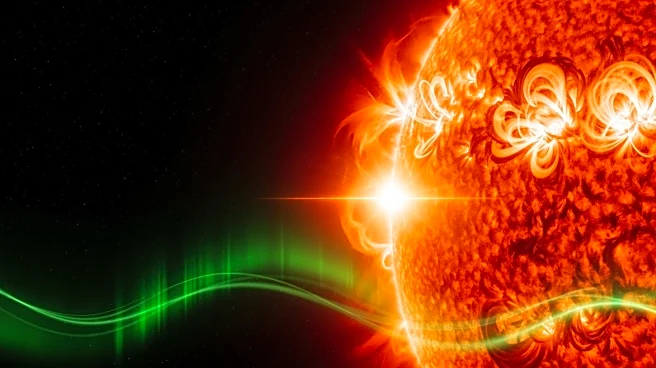
NASA has reported the occurrence of four strong solar flares over recent days, raising concerns about potential disruptions in satellite technology and the visibility of northern lights. The solar flares,
which are large eruptions of electromagnetic radiation from the sun, were recorded on Sunday and Monday. These flares are classified as 'X-class,' indicating their intensity, with one of them being an X8.1 flare, the strongest in several years. Solar flares can cause signal loss in high-frequency communication bands, affecting the sunlit side of Earth. The flares are often precursors to Coronal Mass Ejections (CME), which can lead to northern lights displays when interacting with Earth's atmosphere. The sun's magnetic activity, which is currently at a solar maximum phase, is expected to continue through 2026, according to NOAA.
Why It's Important?
The occurrence of strong solar flares has significant implications for satellite technology and communication systems. The electromagnetic radiation from these flares can disrupt high-frequency communication, potentially affecting aviation, maritime, and emergency services that rely on these frequencies. Additionally, the potential for increased visibility of northern lights could have cultural and tourism impacts, particularly in regions where such displays are rare. The ongoing solar maximum phase suggests that such solar activity may continue, necessitating preparedness in industries reliant on satellite technology. The increased frequency of solar flares also underscores the importance of monitoring space weather to mitigate potential disruptions.
What's Next?
As the sun continues its solar maximum phase, space-weather experts will likely remain vigilant in monitoring solar activity. The potential for further solar flares and CMEs means that industries dependent on satellite technology may need to implement contingency plans to address possible communication disruptions. Additionally, regions in the southern United States may prepare for the possibility of northern lights displays, which could attract tourism and require logistical planning. Ongoing research and satellite launches by NASA and other agencies aim to improve forecasting of solar storms, which could enhance preparedness and response strategies.