


What's Happening?
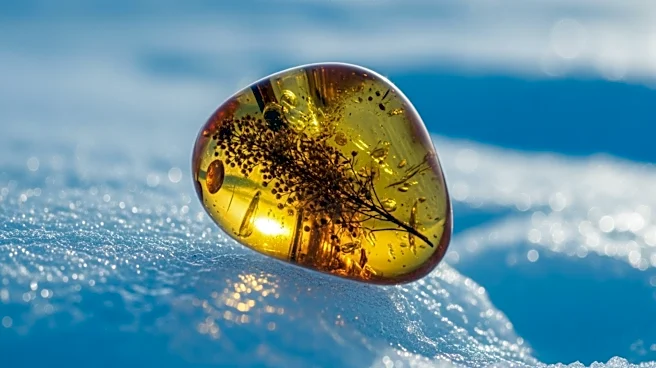
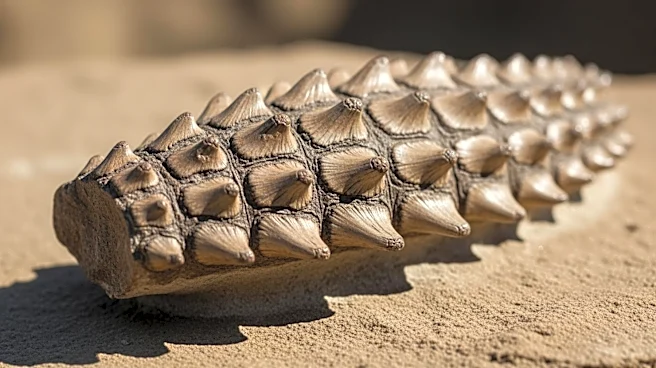
Scientists have discovered a piece of amber beneath the ice in West Antarctica, indicating that resin-producing trees once existed near the South Pole. This amber, dating back 92 to 83 million years, was found in the Pine Island Trough and provides evidence
of forested landscapes during the mid-Cretaceous period. The discovery was made using deep-sea drilling techniques during an expedition aboard the RV Polarstern. This is the first confirmed amber find in Antarctica, filling a significant gap in the fossil record and suggesting that conifer-dominated forests thrived in a swampy, temperate rainforest environment.
Why It's Important?
The discovery of amber in Antarctica challenges current understanding of the continent's historical climate and ecology. It suggests that during the mid-Cretaceous period, Antarctica experienced much warmer conditions, allowing forests to grow even at high latitudes. This finding has implications for understanding past climate change and the adaptability of ecosystems. It also provides a new perspective on the distribution of ancient forests and the potential for similar discoveries in other polar regions.