









What's Happening?
Chinese and Philippine analysts are advocating for the resumption of joint oil and gas exploration in the South China Sea to de-escalate tensions between Beijing and Manila. This recommendation is detailed in a joint report published by the Shanghai Institutes
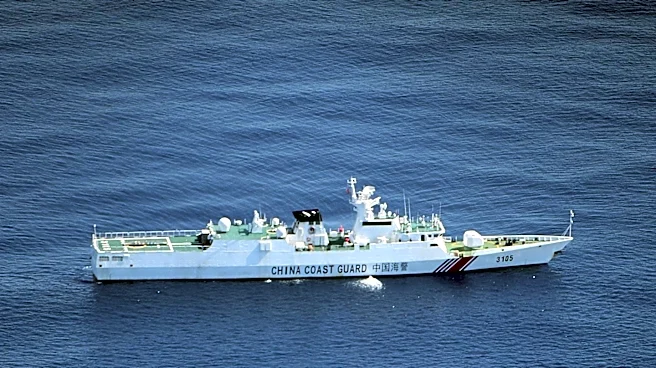
for International Studies. The report characterizes the relationship between the two nations as sensitive and at a critical juncture, suggesting that energy cooperation could serve as an initial practical collaborative project. Philippine President Ferdinand Marcos Jr. previously indicated the possibility of joint exploration and expressed a desire to 'reset' bilateral relations. A memorandum on oil and gas cooperation was signed in 2018 but has not seen significant progress. The Philippine Constitution mandates full state control over natural resources, but the report's authors believe this does not preclude joint exploration in disputed areas, provided comprehensive rules for future cooperation are established. The territorial dispute has led to repeated clashes between the coast guards of both countries in areas like Scarborough Shoal and Second Thomas Shoal.
Why It's Important?
Resuming joint oil and gas exploration in the South China Sea holds significant implications for regional stability and energy security. For the Philippines, such cooperation could address its energy needs, reducing reliance on external sources and potentially lowering energy costs for its citizens and industries. For both nations, it could mitigate the risk of escalation stemming from unilateral actions in the disputed waters, fostering a more stable geopolitical environment. The proposal suggests that joint economic projects with low security sensitivity could build trust, particularly given the disparities in military and economic capabilities between China and the Philippines. This initiative could set a precedent for resolving complex territorial disputes through economic collaboration rather than confrontation, potentially influencing other claimant states in the region. The success or failure of this proposal could impact international shipping lanes and trade routes that traverse the South China Sea, which are crucial for global commerce.
What's Next?
The immediate next steps would involve official responses from the governments of China and the Philippines to the analysts' recommendations. Should both nations express willingness, the focus would shift to negotiating the terms and conditions for resuming joint oil and gas exploration, particularly in light of the Philippine Constitution's provisions on natural resource control. This would likely entail developing comprehensive rules for cooperation in disputed areas. Beyond energy, analysts also proposed collaboration on marine environmental protection and combating crime at sea, areas deemed to have lower political sensitivity and higher potential for consensus. This could include resuming joint scientific expeditions to monitor marine ecosystems, coral reefs, and pollution. The outcome of these discussions will be closely watched by other nations with interests in the South China Sea, as it could influence future diplomatic and economic engagements in the region.
Beyond the Headlines
The proposal for joint oil and gas exploration in the South China Sea delves deeper than mere resource extraction; it represents a potential paradigm shift in managing complex international disputes. By prioritizing economic cooperation over territorial claims, it offers a pathway to de-escalation and trust-building between nations with historical grievances. This approach could challenge traditional notions of sovereignty, suggesting that shared economic benefits can supersede exclusive control in certain contexts. Ethically, it raises questions about equitable resource distribution and environmental stewardship in contested zones. Legally, any agreement would need to navigate the intricacies of international maritime law and domestic constitutional provisions. Culturally, successful collaboration could foster greater understanding and reduce nationalistic tensions. The long-term implications could include a model for conflict resolution in other disputed territories globally, demonstrating that pragmatic economic partnerships can pave the way for broader diplomatic breakthroughs and regional stability, ultimately reshaping geopolitical dynamics in the Indo-Pacific.