
What's Happening?
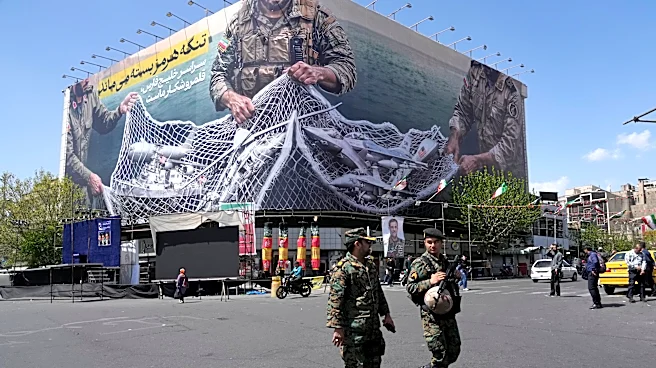
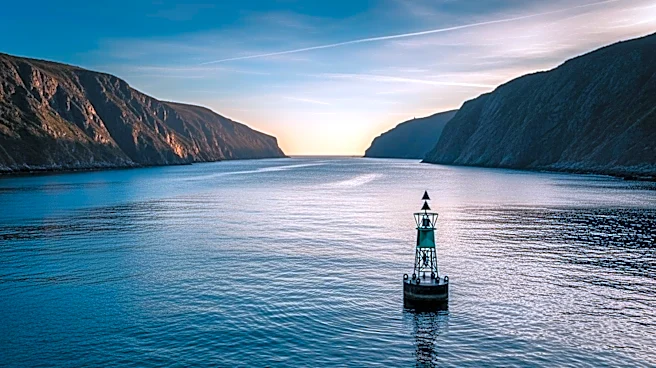
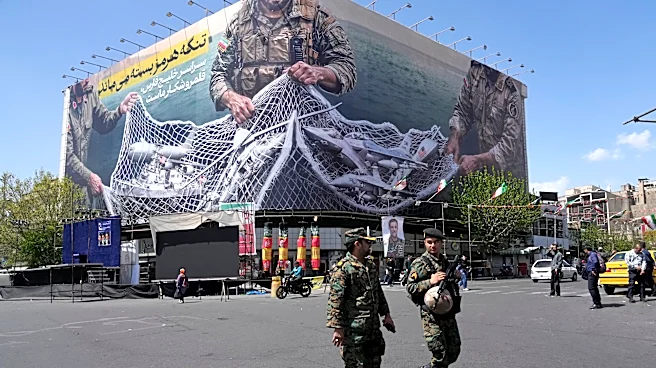
Iran has reportedly lost track of the locations of mines deployed in the Strait of Hormuz, complicating the reopening of this critical waterway. The mines were laid by decentralized forces using small
boats, without a clear command chain, making the Strait almost impossible to transit. This situation has led to a significant reduction in maritime traffic, with only nine ships transiting the Strait on a recent day, compared to a prewar average of over 130 vessels. The U.S. and Iran lack the necessary tools to remove the mines, and Iran plans to charge a $2 million toll for ships crossing its waters.
Why It's Important?
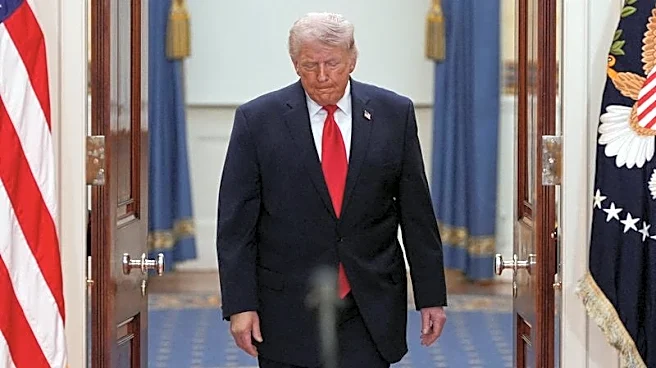
The mining of the Strait of Hormuz poses a major threat to global oil supply, as 20% of global consumption passes through this waterway. The inability to safely navigate the Strait could lead to increased oil prices and economic instability. The situation also heightens geopolitical tensions, with President Trump demanding the complete reopening of the Strait as a condition for negotiations with Iran. The closure of the Strait is seen as a form of short-term extortion, impacting international trade and diplomatic relations.
What's Next?
Negotiations between the U.S. and Iran are likely to focus on resolving the mine issue and reopening the Strait of Hormuz. President Trump has emphasized the need for immediate action, and further diplomatic efforts may be required to reach a resolution. The international community will be closely monitoring the situation, as prolonged closure could have significant economic and political repercussions.