






What's Happening?
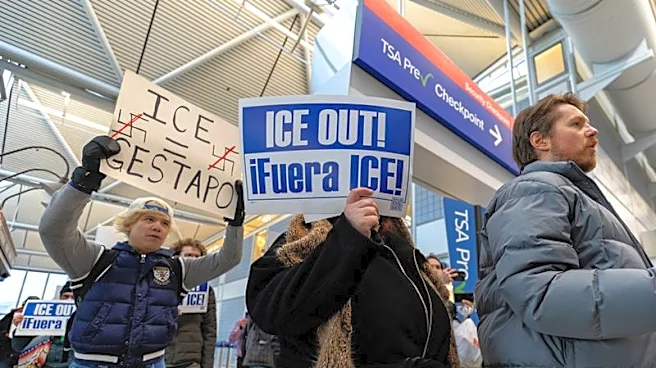
A group of sixty students from Temple University's Beasley School of Law has called on the administration to sever ties with U.S. Immigration and Customs Enforcement (ICE) and the Department of Homeland Security (DHS). The students submitted a proposal
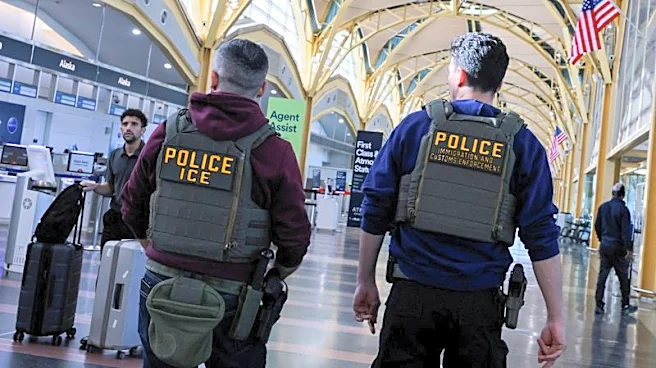
on March 25, urging the school to protect its community from what they describe as aggressive and violent immigration enforcement. The proposal was presented to Interim Dean Kristen Murray during a Coffee and Careers event. The students, who remain anonymous, argue that the current immigration enforcement practices erode due process and constitutional rights. They have also requested the implementation of a text alert system to notify students of ICE presence on campus and the distribution of guides on interacting with ICE. This demand follows a successful student-led cancellation of a DHS recruitment event in November.
Why It's Important?
The actions of the Temple law students reflect a broader national debate over immigration enforcement and the role of educational institutions in such matters. The students' demands highlight concerns about the impact of federal immigration policies on academic environments and the safety of students, particularly those from immigrant backgrounds. This situation underscores the tension between federal immigration enforcement and local community values, as well as the potential for educational institutions to influence public policy through advocacy. The outcome of this demand could set a precedent for other universities facing similar pressures, potentially affecting recruitment practices and institutional policies nationwide.
What's Next?
The administration's response to the students' demands remains to be seen. If the school decides to comply, it could lead to significant changes in how Temple University interacts with federal agencies. Other universities, such as Georgetown, George Washington, and Harvard, have faced similar pressures and may look to Temple's actions as a model. The ongoing dialogue between students and administration could also influence future policies regarding campus safety and student rights. Additionally, the students' use of anonymous communication raises questions about privacy and security in advocacy efforts, which may need to be addressed in future discussions.