



What's Happening?
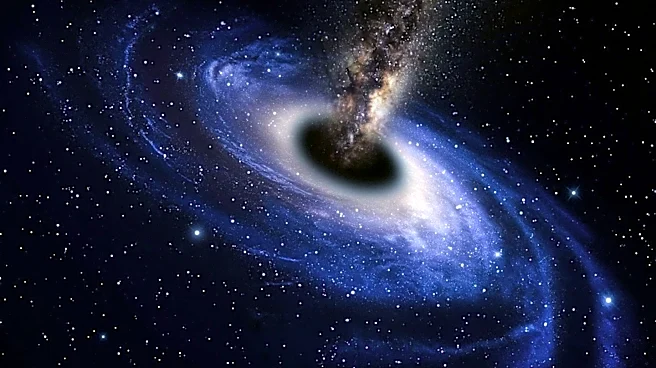
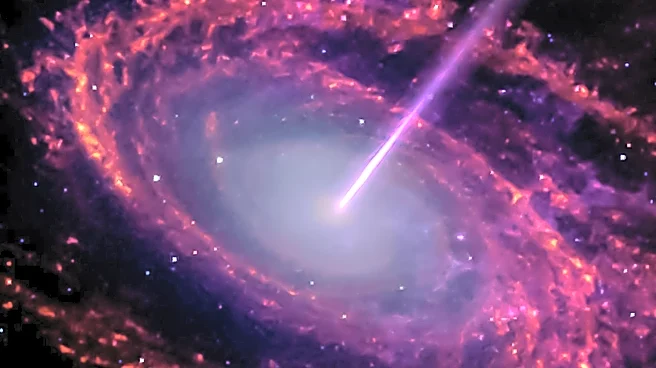
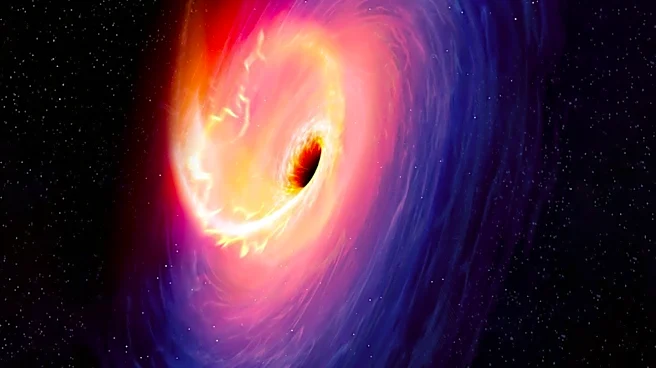
The SETI Institute, through a 'SETI Live' conversation, is exploring the surprising possibility that planet-mass objects could form in the dusty regions surrounding actively feeding supermassive black holes. Research scientists Dr. Lauren Sgro, Dr. Bhupendra
Mishra, and Dr. Wladimir Lyra discussed new simulations suggesting that active galactic nuclei (AGN) environments, which are central regions of galaxies where supermassive black holes actively consume gas, could facilitate the formation of objects with planetary masses. These simulations indicate that processes similar to planet formation around stars, specifically 'streaming instability' where dust grains clump together, could lead to the creation of objects initially around Jupiter's mass. Unlike Jupiter, which is primarily gas, these objects would initially form from solid material. The research suggests that a single active phase of an AGN, typically lasting around two million years, could produce approximately a million such planet-mass objects. These objects could then continue to accumulate material, potentially growing to the size of brown dwarfs or even stars.
Why It's Important?
This research significantly broadens our understanding of where and how planets, or planet-mass objects, can form in the universe. Traditionally, planet formation has been associated exclusively with star systems. The new simulations from the SETI Institute challenge this view by proposing that the extreme environments around supermassive black holes could also be fertile grounds for such formations. This has profound implications for astrobiology and the search for extraterrestrial life, as it expands the potential locations where life could theoretically arise, even if these specific 'blanets' are not immediately habitable due to their extreme formation temperatures. For the scientific community, it opens new avenues for theoretical modeling and observational astronomy, pushing the boundaries of planetary science beyond stellar nurseries. The potential for millions of these objects to form during an AGN's active phase suggests a vast, previously unconsidered population of celestial bodies, which could eventually rival the number of stars in a galaxy.
What's Next?
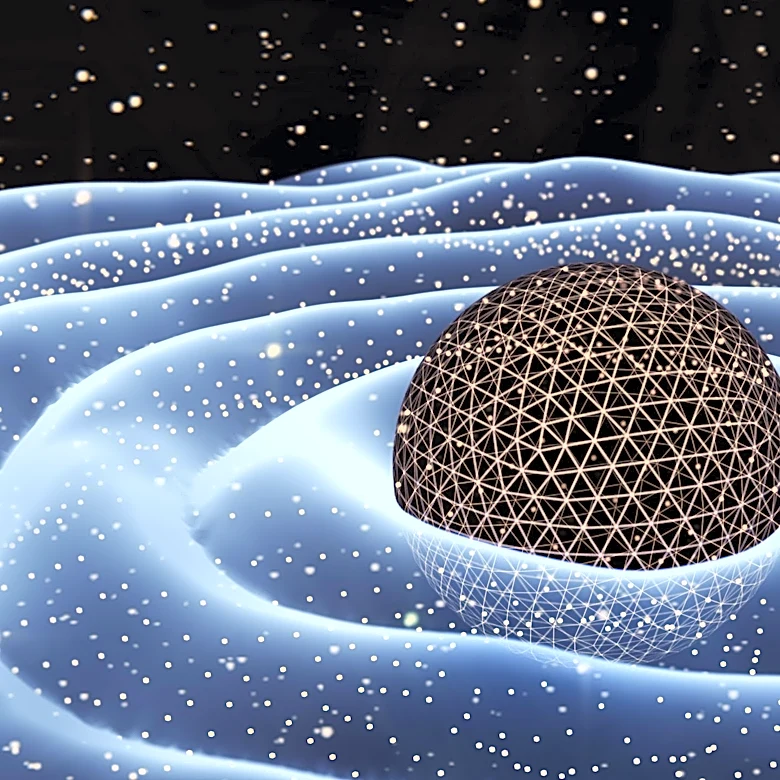
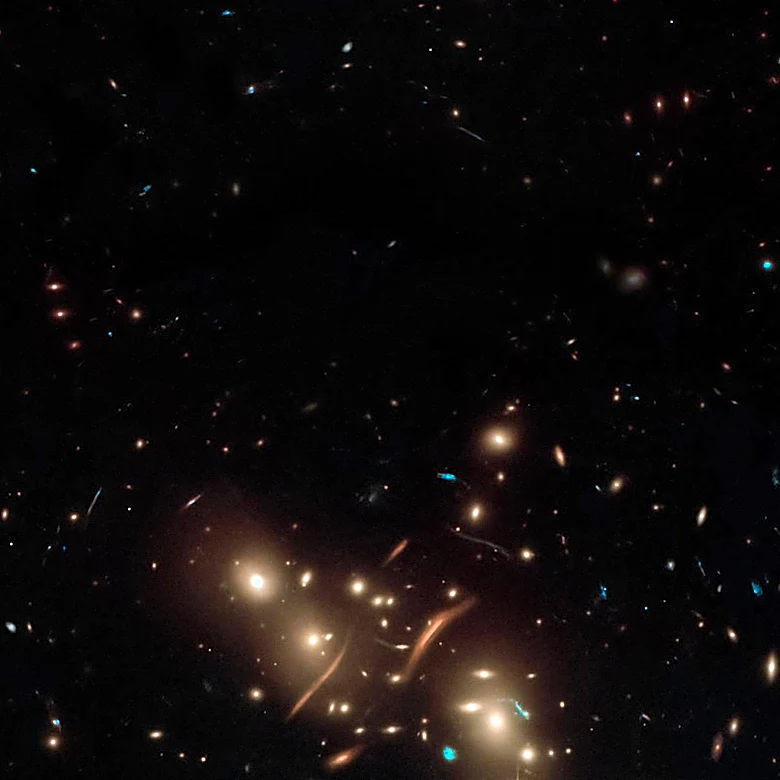
The current simulations are one-dimensional, focusing on the radial direction from the central black hole. The next steps for the researchers involve expanding these simulations into multiple dimensions and incorporating magnetic fields, which are crucial components of the system's physics. They also plan to develop more detailed models of the AGN environment itself to see if the current findings hold true under more comprehensive conditions. Detecting these theoretical 'blanets' would require different approaches than those used for exoplanets around stars, as methods like radial velocity and transit detection are less effective due to the black hole's immense mass and the accretion disk's variability. Potential detection methods include gravitational microlensing, which relies on the bending of light from a background source, and future low-frequency gravitational-wave observations, which could detect signals from a sufficiently massive group of these objects. Further research will also explore the internal structure of these objects to determine if they could reach the pressures and temperatures required for nuclear fusion.
Beyond the Headlines
The concept of 'blanets' forming around supermassive black holes introduces a fascinating new dimension to our cosmic perspective. It highlights the universality of certain physical laws, such as fluid mechanics, which can apply across vastly different scales and environments, from star systems to galactic centers. This research also underscores the dynamic and often counter-intuitive nature of the universe, where extreme conditions can lead to unexpected outcomes. The potential existence of such a large population of planet-mass objects in galactic nuclei could influence the chemical composition of these regions, as these objects, if they migrate inward, could evaporate and contribute heavier elements to the accretion disk. While the habitability of these objects is not established, their mere existence challenges our anthropocentric view of planetary systems and encourages a broader, more imaginative approach to understanding cosmic evolution and the potential for life beyond Earth. The ongoing work by the SETI Institute exemplifies the continuous quest to unravel the universe's deepest mysteries.