





What's Happening?
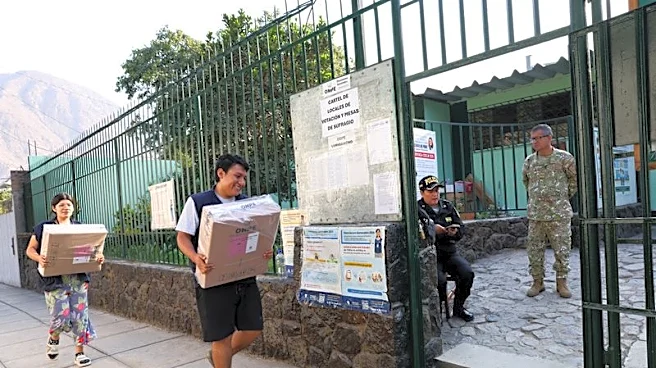
Peru's general election has been extended into a second day after logistical issues prevented the delivery of ballots to several voting centers. This extension affects over 52,000 voters in Lima and those registered in Orlando, Florida, and Paterson,
New Jersey. The election, which features 35 candidates vying for the presidency, comes amid widespread dissatisfaction with the current political climate, marked by rising crime and corruption. Voters are also electing members of a newly reformed bicameral Congress, which holds significant legislative power.
Why It's Important?
The extension of the election highlights ongoing challenges in Peru's electoral process, which could undermine public confidence in democratic institutions. The large number of candidates and the divided electorate suggest that a runoff election is likely, which could further delay the formation of a stable government. The outcome of this election is crucial for addressing Peru's pressing issues, such as crime and economic instability, and for setting the country's future political direction. The election's handling and results will be closely watched by international observers and could influence Peru's relations with other countries, including the United States.
What's Next?
With the likelihood of a runoff election in June, Peru faces a period of political uncertainty. The new government will need to address the electorate's concerns about crime and corruption while navigating the complexities of a divided Congress. The international community, including the U.S., will be monitoring the situation to assess the implications for regional stability and bilateral relations. The election's outcome could also impact Peru's economic policies and its approach to foreign investment and trade.