



What's Happening?
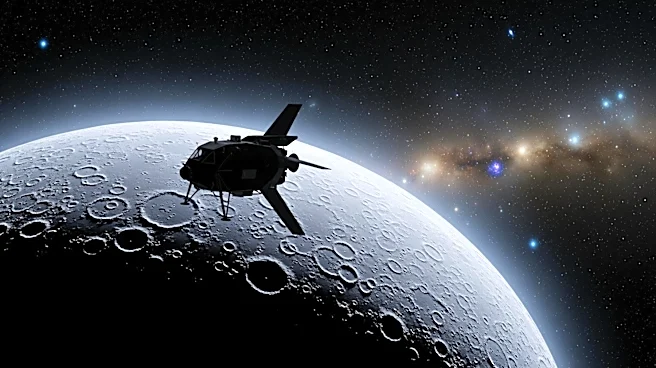
NASA's Artemis II mission is on the verge of setting a new distance record as the Orion capsule prepares to loop around the moon's far side. This maneuver will place the spacecraft at the farthest point from Earth ever reached by humans, surpassing the Apollo
13 mission's record. As the capsule navigates the moon's shadowed side, the crew will experience a 40-minute period of radio silence due to the moon blocking communication with NASA's Deep Space Network. This mission is a critical component of NASA's Artemis program, which aims to return humans to the moon and establish a sustainable presence there.
Why It's Important?
The Artemis II mission is a significant milestone in NASA's efforts to advance human space exploration. By achieving a new distance record, the mission demonstrates the capabilities of the Orion spacecraft and the readiness of NASA's systems for future deep-space missions. This mission is a precursor to more ambitious goals, including landing astronauts on the moon and eventually sending humans to Mars. The success of Artemis II is crucial for maintaining U.S. leadership in space exploration and fostering international collaboration in scientific research and technological development.
What's Next?
Following the completion of the Artemis II mission, NASA will analyze the data collected to refine plans for future missions, including Artemis III, which aims to land astronauts on the moon. The mission's success will bolster confidence in the Artemis program and support efforts to develop the infrastructure needed for long-term lunar exploration. As NASA continues to collaborate with international and commercial partners, the Artemis program will play a pivotal role in shaping the future of space exploration and expanding human presence beyond Earth.